When Should You Request a Pre-Shipment Inspection?

You have placed an overseas order, paid a deposit, approved the sample and waited for production. The supplier now says the goods are finished and asks for the remaining balance before shipment.
This is one of the most important points in the sourcing process because the buyer still has meaningful commercial leverage. Once the balance is paid and the goods leave the factory, correcting quality, quantity or packaging problems can become much harder and more expensive.
A pre-shipment inspection, or PSI, is designed to give the buyer an independent check of the finished order before it ships. It can confirm whether the goods broadly match the agreed specification, quantity, workmanship, packaging and labeling requirements before the final payment or release of cargo.
But not every order needs the same level of inspection. The real decision is whether the risk of an undetected problem is greater than the cost and effort of checking the shipment.
What Is a Pre-Shipment Inspection?
A pre-shipment inspection is normally performed when production is substantially complete and enough finished goods are available for a meaningful inspection. An inspector visits the factory or warehouse, selects samples from the completed order and checks them against the buyer's agreed requirements.
Depending on the product, the inspection may include:
- Quantity verification
- Visual workmanship checks
- Dimensions and measurements
- Color, finish and material checks where practical
- Basic functional testing
- Product markings and labels
- Retail or export packaging
- Carton quantity and carton markings
- Accessories, manuals and included components
- Randomly selected sample checks
- Photos of products, cartons and packing condition
The inspection report gives the buyer evidence about the order before shipment. It does not guarantee that every single unit is perfect, and it does not replace product certification, laboratory testing or a well-written specification.
The Best Time for PSI Is Before the Buyer Loses Payment Leverage
For many international manufacturing orders, suppliers request a structure such as 30% deposit before production and 70% before shipment.
If you plan to use a pre-shipment inspection, the most useful timing is generally:
- Production is substantially complete.
- The goods are available for inspection and preferably packed or close to final packing.
- The inspection takes place.
- The buyer reviews the report and resolves any unacceptable findings.
- The remaining balance is released according to the agreed payment terms.
- The goods are shipped.
In other words, do not arrange an inspection after you have already paid the full balance unless there is a specific reason to do so. The value of PSI is not only finding defects. It is finding them while the supplier still has a strong commercial incentive to correct them.
If your supplier is asking for a production deposit, see Should You Pay a Supplier 30% Deposit Before Production? for a practical approach to payment milestones and buyer leverage.
When a Pre-Shipment Inspection Is Usually Worth Considering

1. It is your first order with the supplier
A supplier may communicate well, provide convincing samples and appear professional, but the first mass-production order is still the first time you see how that supplier performs at commercial scale.
Samples are made under controlled conditions. Mass production introduces different risks: inconsistent workmanship, substitutions, rushed finishing, packaging errors, missing accessories or quantity shortages.
For a meaningful first order, an independent inspection can be a relatively inexpensive way to verify that the production result matches the expectations created during sourcing.
2. The order value is high enough that a mistake would be expensive
Inspection cost should be compared with the potential loss, not just with the product unit price.
If an order is worth USD 2,000 and defects can be easily replaced locally, a full third-party PSI may not make economic sense. If an order is worth USD 80,000 and a quality problem would also create freight, customs, rework, customer claims and lost-sales costs, the economics are very different.
The more expensive the consequences of a bad shipment, the stronger the case for inspection.
3. The product is customized or private label
Customized orders create additional failure points. An otherwise acceptable product can still be commercially unusable if the supplier prints the wrong logo, uses outdated artwork, applies the wrong barcode, mixes colors, omits an accessory or uses incorrect retail packaging.
A PSI can check these details before thousands of units cross a border with the same mistake.
4. The specification has several measurable requirements
Inspection becomes more useful when the buyer has objective criteria that an inspector can actually verify.
Examples include:
- Dimensions
- Weight
- Component count
- Finish
- Assembly
- Label position
- Carton quantity
- Basic functionality
- Accessories
- Packaging configuration
The clearer your specification, the more useful the inspection report will be.
5. Previous orders had quality or packing problems
If the supplier has already shipped defects, shortages or packaging errors, repeating the same process and hoping for a different result is weak risk management.
Inspection can be used as a temporary control while the supplier corrects its production process, or as an ongoing requirement for higher-risk products.
6. The shipment is difficult or expensive to return
International returns are rarely as simple as domestic returns. Reverse freight, customs procedures, taxes, warehousing and replacement lead times can make returning defective goods uneconomic.
For large machinery, furniture, bulk goods, fragile products or full-container shipments, identifying a problem before shipment is usually far cheaper than identifying it after arrival.
7. Your customer has strict delivery or quality expectations
If the imported goods are already committed to a retailer, distributor, project or production line, a bad shipment can create losses beyond the purchase itself.
A delayed replacement shipment can cause stockouts, project delays, penalties, lost shelf space or damage to your customer relationship. In those cases, inspection is partly a supply-continuity decision.
When PSI Alone May Not Be Enough
A pre-shipment inspection looks at finished goods. Some problems need to be controlled earlier.
Complex production processes
If an important defect can be created early and hidden later, waiting until the end of production may be too late. A during-production inspection can identify process problems before the entire order is completed.
Raw-material risk
If the exact material matters, visual inspection may not prove composition. Stainless-steel grade, chemical content, fabric composition, coating chemistry, food-contact properties or electrical characteristics may require certificates or laboratory testing.
Safety or regulatory compliance
A normal PSI should not be treated as proof that a regulated product meets destination-country safety requirements. Compliance may require accredited laboratory tests, declarations, technical documentation, certifications or other product-specific evidence.
High-value machinery or engineered products
For complex machinery, you may need a factory acceptance test, technical inspection or performance test rather than a basic consumer-goods PSI checklist.
PSI Is Different from Laboratory Testing
This distinction is important.
An inspector can check visible and measurable characteristics using the agreed inspection scope. A laboratory can test characteristics that cannot reliably be confirmed by visual inspection or simple field tools.
For example, a PSI may confirm that a children's product has the correct label and packaging. It cannot necessarily confirm chemical compliance simply by looking at the product.
Similarly, an inspector may confirm that a metal component has the correct dimensions and finish, but verifying alloy composition can require material testing.
Use inspection for what inspection can prove, and laboratory testing for what only testing can prove.
What Should You Give the Inspector?
An inspection is only as useful as the requirements provided to the inspector.
Do not send a purchase order that says only “500 pieces, good quality.” Give the inspector objective references.
A useful inspection package may include:
- Purchase order
- Final product specification
- Approved sample photos or reference sample
- Drawings
- Dimensions and tolerances
- Color references
- Approved artwork
- Barcode requirements
- Packaging specification
- Carton markings
- Required accessories
- Functional test instructions
- Known critical defects
- Any agreed acceptance criteria
If suppliers are quoting against incomplete specifications in the first place, inspection will not solve the underlying procurement problem. Our How to Get Quotes from Suppliers Online: A Step-by-Step RFQ Guide guide explains how to structure a clearer supplier request before an order is placed.
What Does an Inspector Actually Sample?
Third-party inspections normally use sampling rather than checking every unit in the order.
The inspector selects units from different cartons or production lots according to the inspection plan, then checks those samples for defined defects and requirements. Buyers may also agree acceptance criteria for critical, major and minor defects.
This means a PSI reduces uncertainty but does not eliminate it. A passed inspection means the inspected sample met the agreed acceptance criteria. It does not mean every unit in the shipment has been individually certified as defect-free.
For products where even one defective unit creates unacceptable safety or financial risk, the buyer may need a different control plan.
Should the Supplier Choose the Inspection Company?
If the purpose of the inspection is independent verification, the buyer should normally control the inspection scope and receive the report directly.
The supplier can coordinate access and timing, but the buyer should know who the inspector is working for and what standard will be used.
Supplier internal QC reports can still be useful. They simply serve a different purpose from an independent buyer-appointed inspection.
What If the Inspection Fails?
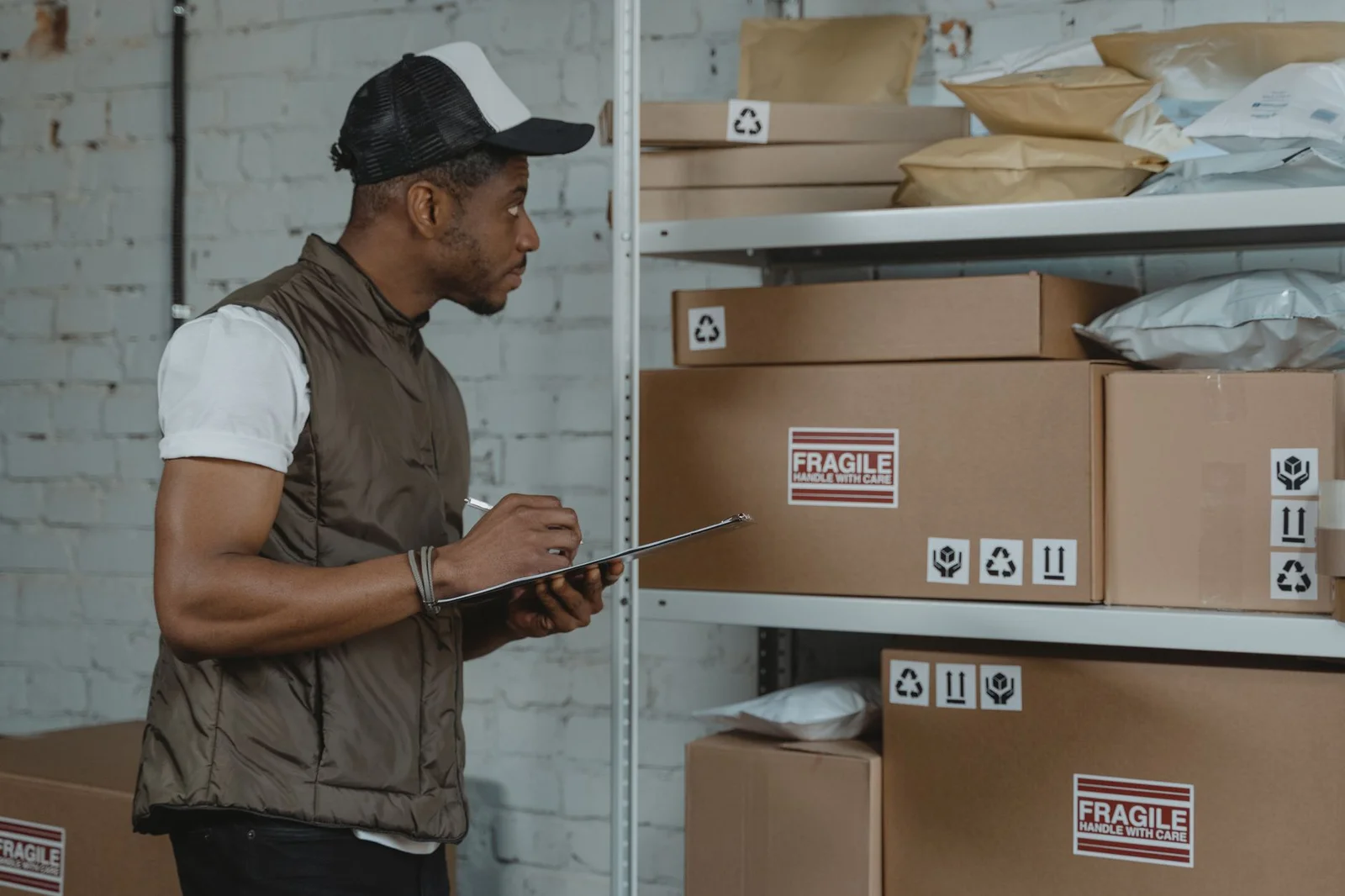
A failed inspection should trigger a defined response rather than an immediate argument about whether the supplier is “good” or “bad.”
First, separate the findings into categories:
- Critical problems that make the goods unsafe or unusable
- Major defects that affect function, appearance or commercial acceptability
- Minor issues that may be acceptable within agreed limits
- Quantity shortages
- Packaging or labeling problems
- Documentation issues
Then agree what the supplier must do. Depending on the problem, this may include sorting, reworking, replacing defective units, repacking, correcting labels or reproducing part of the order.
If the supplier corrects the goods, a re-inspection may be appropriate before payment or shipment.
The strongest position is to define this process before the order begins. Your purchase terms can state that final payment is subject to agreed inspection or verification milestones.
Do Not Use Inspection as a Substitute for Supplier Selection
Inspection is a control, not a sourcing strategy.
A weak supplier cannot always be turned into a reliable supplier simply by adding more inspections. If every shipment requires repeated rework, urgent re-inspections and arguments about obvious defects, the real problem may be supplier capability rather than inspection frequency.
This is particularly important when comparing a direct manufacturer with an intermediary. The sourcing structure should match the buyer's ability to manage quality, logistics and communication. See Should You Buy Directly from a Manufacturer or Through a Trading Company? for the trade-offs between direct factory sourcing and using a trading company.
Connect the Inspection to the Payment Structure
The commercial value of PSI increases when it is connected to a payment milestone.
For example:
30% deposit to start production. 70% balance after completed production, acceptable pre-shipment inspection and before shipment.
The exact wording and payment structure will vary by transaction, but the principle is straightforward: verification should happen while the buyer still has enough leverage to make corrective action realistic.
For larger transactions, payment instruments can change how this process works. LC vs T/T: Which Payment Method Is Safer for Importers? compares letters of credit and T/T transfers from an importer-risk perspective.
When You May Skip a Third-Party PSI
Not every shipment requires an external inspection company.
You may decide not to use third-party PSI when:
- The order value is very small.
- The supplier has a strong and proven history with the exact product.
- Your own employee or local agent performs the inspection.
- The product is standard stock from a reliable source.
- The cost of a potential defect is lower than the inspection cost.
- The shipment can be economically replaced or returned.
- Another quality-control process already provides sufficient verification.
The decision should be based on risk, not habit.
A Practical Risk Test
Before deciding whether to inspect, ask five questions:
- How much money is exposed? Include freight, duties, rework and lost sales, not only product cost.
- How easy is the product to inspect? Can meaningful defects be checked before shipment?
- How proven is the supplier? Is this the first order or the fiftieth?
- How expensive would failure be? Could a bad shipment stop a project or damage a customer relationship?
- Can the problem still be corrected before shipment? If yes, inspection has more value.
If the potential loss is large, the supplier is new and the product can be meaningfully checked before shipment, PSI is usually easier to justify.
Pre-Shipment Inspection vs Container Loading Check
These controls answer different questions.
A PSI focuses primarily on whether the finished goods meet the buyer's requirements.
A container loading check focuses on what actually goes into the container and how it is loaded. This can help verify carton count, container condition, loading sequence, seal number and handling during loading.
For some orders, buyers use both. The goods are inspected first, then loading is supervised later. For lower-risk shipments, PSI alone may be sufficient.
For a broader set of checks before cargo moves, see the International Trade Shipment Checklist: 25 Things Importers and Exporters Should Verify.
Do Not Wait Until the Supplier Says the Truck Is Coming Tomorrow
Inspection should be planned as part of the purchase order timeline.
If the supplier finishes production on Friday and the container is booked for Saturday, there may be no practical time to inspect, correct defects and re-inspect before loading.
Agree the inspection window early. Ask the supplier to notify you when production is nearing completion, and leave enough time between inspection and shipment for corrective action if needed.
A rushed inspection schedule usually favors the party that wants the goods to move immediately, not the party trying to verify them carefully.
Final Takeaway
A pre-shipment inspection is most valuable when three conditions are present: the buyer has meaningful financial exposure, the finished goods can be objectively checked, and the inspection happens before the buyer gives up most of its payment leverage.
First orders, high-value shipments, customized products, previous quality problems and difficult-to-return goods are strong candidates for PSI.
But inspection is not a substitute for clear specifications, supplier qualification, compliance testing or good payment terms. The best results come when all of these controls work together.
Define what acceptable goods look like before production starts, schedule the inspection before final payment and shipment, and give the inspector objective criteria rather than vague expectations.
Continue on FirmaPanel
Find suppliers, compare quotations and build clearer sourcing requirements before placing your next international order.