Wholesale Tableware Suppliers: Source Cutlery, Plates, Bowls and Drinkware

Tableware looks straightforward until a buyer has to order it by the pallet. A plate is no longer just a plate: its rim strength affects breakage, its glaze must survive repeated washing, its shape changes carton efficiency, and a small difference in weight can noticeably alter freight costs across a full container.
The same is true of cutlery, serving pieces and drinkware. Two products may appear almost identical in a catalogue while differing in steel grade, polishing quality, food-contact documentation, replacement availability and consistency from one production run to the next. Good sourcing therefore begins with the intended customer and working environment, not with appearance alone.
This guide is intended for importers, distributors, hotel and restaurant suppliers, retailers, catering companies and private-label buyers comparing wholesale tableware suppliers. It covers the points that usually make the difference between a smooth repeat-order programme and a shipment that creates complaints.
Start with the customer who will use the product
A homeware retailer can accept a delicate embossed edge that would be troublesome in a busy restaurant. A hotel purchasing team may prefer a smaller range of stackable shapes because storage, replacement and washing efficiency matter more than seasonal design. An online seller, meanwhile, has to pay close attention to individual parcel protection and product photography.
Before requesting prices, define the sales channel, expected retail or contract price, target market, annual volume and normal reorder size. This gives suppliers enough context to recommend a suitable body, finish and packing method. It also prevents quotations for attractive products that do not fit the actual programme.
Choose the right material, not simply the lowest quotation

Porcelain is often selected for its clean appearance, low water absorption and suitability for refined table settings. Stoneware offers more visual character and works well with reactive glazes, organic shapes and casual dining collections. Ceramic bodies can be economical, although specifications vary widely and should be checked carefully when products will face heavy use.
For stainless-steel cutlery, buyers should ask for the steel composition rather than relying on the word “stainless.” The balance between chromium and nickel influences corrosion resistance, appearance and cost. Thickness, edge finishing, polish consistency and the feel of the handle are equally important. A sample should be handled as it would be by the end customer; catalogue measurements rarely communicate balance well.
Serving trays and accessories may combine steel, wood, cork, recycled leather, silicone or composite materials. Mixed-material products can create a distinctive collection, but they also require clear care instructions and careful review of how each component reacts to heat, moisture and commercial cleaning.
Selected ceramic and dinnerware suppliers
FirmaPanel includes suppliers with both design-led collections and volume-oriented dinnerware programmes. The profiles below were selected for the depth and relevance of their current tableware ranges.
 COSTA NOVA
COSTA NOVA offers coordinated ceramic collections that can suit retail, hospitality and buffet presentation programmes. Buyers planning a broad assortment can compare everyday designs with more distinctive ranges without immediately moving to a different supplier.
 COSTA NOVA Vila Ceramic Tableware Collection
 COSTA NOVA Escada Buffet Tableware Collection
 Guangxi Beiliu Homefavour Houseware Co., Ltd.
Guangxi Beiliu Homefavour Houseware presents porcelain, stoneware and flatware products, including designs positioned for OEM and ODM programmes. This type of supplier can be useful when a buyer wants dinnerware and cutlery to share one commercial direction.
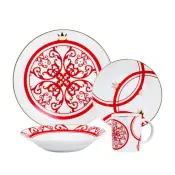 Royal Red Decorated Porcelain Dinnerware Set
 16/24pcs 18/0 Stainless Steel Flatware Set
What to inspect on plates, bowls and mugs
Begin with a level-table test. Plates and bowls should sit steadily without rocking. Stack several pieces and check whether the pile remains straight; poor stacking becomes a daily irritation in restaurants and makes warehouse cartons less efficient. Look closely at the foot ring, rim and handle joints, where chips and cracks commonly begin.
Ask how the colour and glaze are controlled between batches. Reactive finishes are expected to vary, but the supplier should still be able to explain the acceptable range. For printed or decorated products, clarify whether the design is underglaze, in-glaze or on-glaze, and whether metallic details affect dishwasher or microwave use.
A sensible sample review includes repeated dishwasher cycles, hot-and-cold exposure, stain checks and a basic edge-impact comparison. Large hospitality orders may justify laboratory testing and a written inspection standard covering dimensions, colour tolerance, glaze defects, pinholes, warping and permissible breakage.
Cutlery and professional serving tools
Cutlery is a tactile product. Buyers should compare weight, balance and the smoothness of every contact point. Fork tines need clean, even spacing. Spoon bowls should have a comfortable edge. Knife blades must match the intended use; a table knife, steak knife and professional preparation knife should not be evaluated by the same standard.
 Apeldoornse Messenfabriek Amefa B.V.
Apeldoornse Messenfabriek Amefa has a broad catalogue covering cutlery, kitchen knives and related tabletop products. A wide range can be helpful for distributors serving several price levels or customer types.
 Amefa Cutlery and Kitchen Products
 F.lli Rivadossi srl
F.lli Rivadossi supplies stainless-steel utensils and professional kitchen tools, including products intended for restaurants, catering operations and other HoReCa buyers.
 Miwa Pro Professional Kitchen Tools
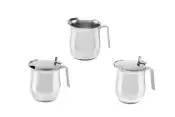 Triocof Stainless Steel Milk Jugs
When requesting a cutlery quotation, specify the pieces in each set, steel grade, thickness or unit weight, finish, logo method, inner-box quantity and master-carton quantity. A quotation for “24-piece cutlery set” is not comparable until these details match.
Tableware for hotels, restaurants and catering

Hospitality buyers tend to reorder rather than purchase once. That makes continuity as important as the first price. Ask whether the supplier treats the collection as a long-term range, how replacement pieces are ordered, and whether moulds or finishes are likely to change.
Commercial users usually benefit from stackable plates, reinforced edges, practical bowl depths and shapes that pass cleanly through standard dishwashing and storage systems. Buffet products should be evaluated as a group: heights, footprints and serving access must work together on a counter, not only look good as individual pieces.
 LIND DNA
LIND DNA adds another side to tabletop sourcing through hospitality accessories, recycled-leather products and trays that can be customised for a venue or brand identity.
 LIND DNA Hospitality Collection
 LIND DNA Teak Trays
For a hotel or restaurant programme, prepare a simple schedule showing the number of seats, pieces required per cover, reserve stock and expected annual replacement rate. Suppliers can quote much more accurately when they understand the operating scale.
Cookware and bakeware can strengthen a tableware range
Many distributors build a larger kitchen and dining offer around their core tableware collection. Cookware, oven-to-table pieces and bakeware can raise average order value and give retail customers a more complete category.
 Norbert Woll GmbH
Norbert Woll GmbH has cookware, knives, bakeware and preparation products that can complement a premium kitchenware assortment.
 Logic Steel Stainless Steel
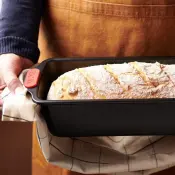 Let's Bake Silicone Sustainable
Cookware needs a different technical review from dinnerware. Ask about body construction, base thickness, coating system, compatible heat sources, oven limits, handle attachment and spare-part availability. Claims such as “induction suitable” or “non-stick” should be supported by a clear specification and, where appropriate, test documentation.
Packaging deserves its own discussion

Breakage is not only a production-quality issue. A perfectly made plate can still fail if the dividers, carton strength or pallet pattern are unsuitable for export transport. Request packaging photographs and a complete packing specification before approving the order.
For ceramic products, confirm the number of pieces per inner box, cushioning method, master-carton dimensions, gross weight and pallet quantity. Ask whether the supplier has completed drop or transport tests on the proposed packing. If the products will be sold online, the export carton may not be enough; parcel delivery creates different impacts from pallet transport.
Mixed containers can be commercially useful, especially for a first order, but they require discipline. Agree on minimum quantities per design and colour, loading sequence, carton markings and a final packing list. Too many low-volume variations can increase errors and make replenishment difficult.
Private label and custom development
Customisation ranges from a logo on an existing item to a fully developed shape. The first option is faster and carries less risk. A new mould, custom glaze or exclusive handle design requires development time, approvals and a realistic volume commitment.
Ask the supplier to separate one-time charges from unit prices. Artwork, screens, moulds, sample courier fees and packaging setup should be visible rather than buried in the product price. Ownership and future use of custom moulds should also be agreed in writing.
For branded retail products, request a pre-production sample with the final logo, barcode, care text and packaging. A plain factory sample does not prove that the finished retail presentation will be correct.
Documents and compliance
Food-contact requirements depend on the material and destination market. Buyers should tell the supplier where the goods will be sold and request relevant, current documentation for the actual product construction. A report for a different glaze, steel grade or coating is not automatically applicable.
Depending on the product and market, the purchasing file may include food-contact test reports, material declarations, coating information, heavy-metal migration results, dishwasher or microwave claims, packaging declarations and origin documents. Retailers may add their own restricted-substance or social-compliance requirements.
Compare the landed offer, not the unit price
A lower factory price can disappear once packaging volume, inland transport, inspection, duty, breakage and replacement stock are included. Compare quotations on the same Incoterm and create a landed-cost estimate for each serious option.
Lead time should be divided into sample approval, production and transport. Ask what happens during peak season and how quickly repeat orders can be produced. For a growing collection, reliability on the second and third order is usually more valuable than a small saving on the first shipment.
A practical RFQ checklist
- Product type, material and intended customer
- Required sizes, colours and pieces per set
- Estimated first order and annual volume
- Target market and required compliance documents
- Logo, decoration and retail-packaging requirements
- Acceptable MOQ per design or colour
- Sample requirement and approval process
- Requested Incoterm, destination port and delivery date
- Inspection standard and spare or replacement quantity
A clear request normally receives better quotations than a one-line enquiry asking for a catalogue and “best price.” Suppliers need enough detail to propose the right product and packing configuration.
Find tableware suppliers and request quotations
FirmaPanel allows buyers to review supplier profiles and compare products from different tableware and kitchenware ranges. Use the featured suppliers and products in this guide as a starting point, then prepare one consistent specification for the companies that fit your market.
When you are ready to compare availability, minimum quantities, customisation and export terms, Post RFQ. Include photographs or reference designs where useful, but state clearly which features are essential and which can be adjusted. That gives suppliers room to offer a practical alternative without changing the commercial purpose of the order.