 Sourcing food packaging from another country can look straightforward until the first quotations arrive. One supplier prices a thinner material, another excludes printing plates, and a third offers a different carton quantity that changes the freight cost. All three quotations may appear reasonable, yet they may describe three different products. The practical way to avoid this is to treat packaging as a technical purchase from the beginning, not as a simple request for a cup, pouch, tray or box.
A clear specification helps serious suppliers respond accurately. It also makes weak or incomplete offers easier to identify. This guide explains how to prepare the request, what to ask before ordering, and how to compare international food packaging suppliers without turning the process into weeks of unnecessary messages.
Begin with the food, filling process and sales channel
The package must suit the product inside it. A container used for chilled salad has different requirements from a pouch used for roasted coffee, a carton for frozen food or a tray for a ready meal. Before discussing appearance, describe how the packaging will actually be used.
Useful starting information includes:
- The food type and whether it is dry, oily, acidic, frozen, chilled or hot-filled
- The expected shelf life
- The filling temperature and sealing method
- Whether filling is manual or performed on an existing machine
- How the product will be stored, transported and displayed
- The destination market
If the packaging must run on an existing filling or sealing line, provide the machine model, relevant drawings and tolerances. A small difference in rim shape, film width or pouch dimensions can cause production delays even when the packaging itself looks acceptable.
Describe the item in measurable terms
 Buyers often send reference photos without measurements. Photos are helpful, but they do not define capacity, wall thickness, material structure or closure performance. A supplier needs measurable details to reproduce the intended item and calculate the price correctly.
For a rigid container, specify the external dimensions, usable volume, material, color, lid type, temperature resistance and stacking requirements. For a flexible pouch or film, describe the width, length, material layers, total thickness, barrier requirement, sealing area and printing coverage. For a paper carton, include the board grade, coating, construction, food-contact area and flat or assembled delivery preference.
A usable request might read:
Rectangular 750 ml polypropylene takeaway container with a transparent anti-fog lid. The base must be suitable for hot meals and microwave reheating. Initial order: 50,000 sets. Plain sample required before custom sleeve printing. Please quote FOB and CIF Rotterdam, including pieces per carton and estimated loading quantity.
This is still a short request, but it gives suppliers enough information to ask focused questions rather than guessing at the basic product.
Separate standard packaging from custom development
Standard items usually offer lower minimum quantities and faster sampling. Custom packaging can provide a better fit and stronger brand presentation, but it may require a mold, cutting die, printing cylinder or other tooling. Buyers should establish early whether the project can use an existing format or genuinely requires a new design.
When tooling is involved, ask who owns it, where it will be stored, how long it is expected to last and whether replacement costs may arise. Also confirm whether tooling is exclusive to your company. A low initial tooling price is less attractive if the ownership terms are unclear.
For printed packaging, clarify the number of colors, print method, artwork format and whether the quoted price includes setup costs. Ask how color will be approved. A digital proof can confirm layout, but it may not reliably represent the final color on kraft paper, transparent film, aluminum or another production material.
Request food-contact documentation before final approval
Food-contact requirements vary by material, use and destination market. Do not assume that a general statement such as “food grade” is enough. Tell the supplier where the finished packaging will be sold and ask which documents they can provide for that specific material structure and application.
Depending on the project, buyers may request a declaration of compliance, migration test results, material specifications, information about printing inks and adhesives, or certificates related to the supplier's quality and food-safety systems. The document should relate to the actual item being offered, not merely to a broad family of materials.
Documents also need to remain consistent with production. If the supplier proposes a material substitution after approval, confirm whether the existing test documents still apply. This is particularly important when a quotation is revised to lower the price.
Ask for a quotation that can be compared
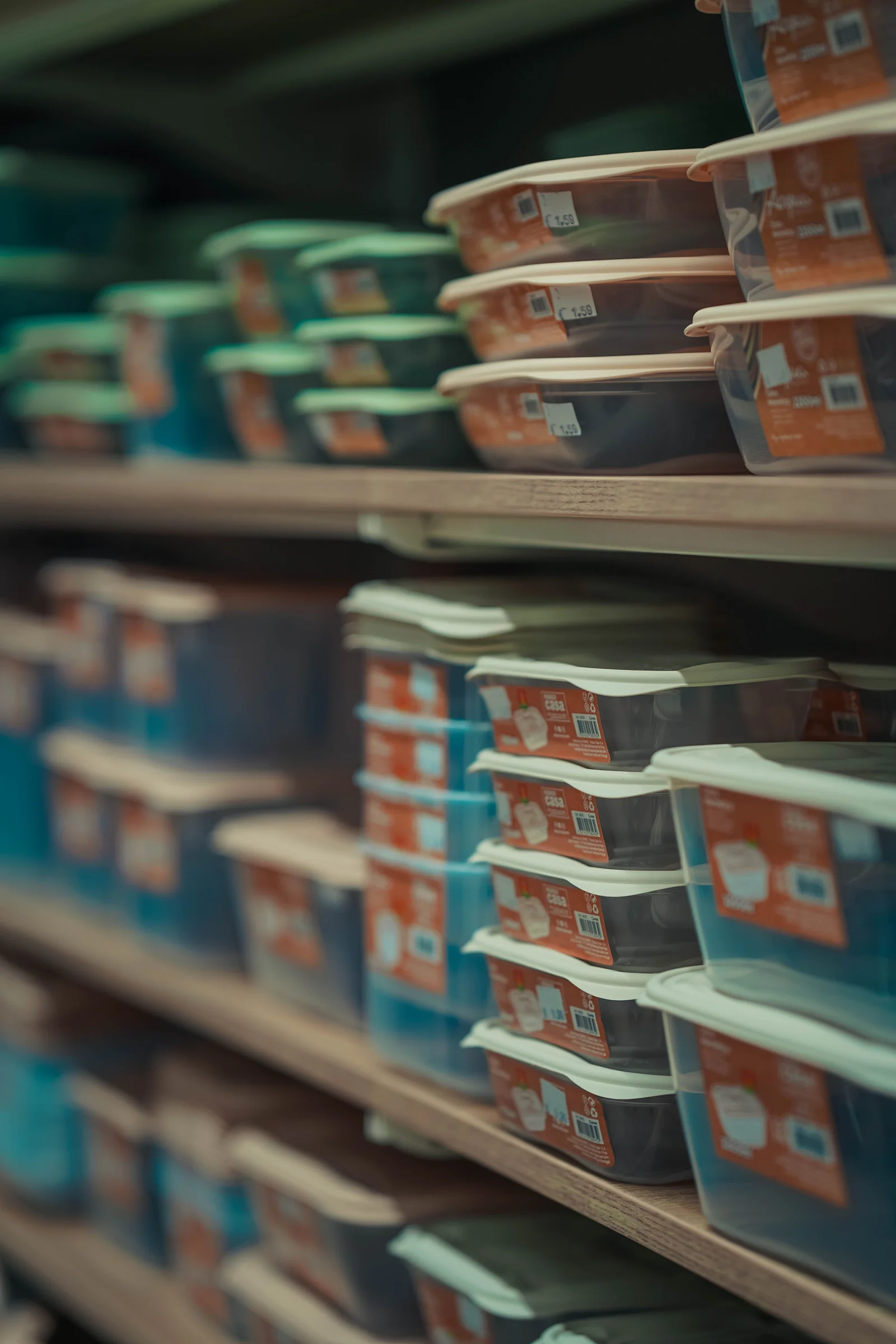 Unit price alone is not enough. Packaging quotations frequently differ in material thickness, print coverage, carton quantity, tooling, delivery term and included accessories. Create a simple comparison sheet and make every supplier answer the same commercial questions.
| Quotation item | What to confirm |
|---|---|
| Unit price | Exact specification, order quantity and currency |
| MOQ | Per size, color, design and printed version |
| Tooling | Mold, die, cylinder or plate cost and ownership |
| Samples | Stock sample, custom sample, cost and preparation time |
| Lead time | From deposit, artwork approval or sample approval |
| Packing | Pieces per carton, carton dimensions and pallet method |
| Delivery term | EXW, FOB, CIF, DAP or another clearly named Incoterm |
| Payment | Deposit, balance timing and accepted method |
| Documents | Included compliance and quality documentation |
Compare like with like. An FOB price cannot be compared directly with a CIF price, and a quote for 70-micron film is not equivalent to one for 90-micron film. When an offer is much cheaper, identify the specific reason before treating it as a saving.
Calculate freight using packaging volume, not only weight
Many food packaging products are light but bulky. Cups, trays, bottles and assembled cartons can fill a container before reaching its weight limit. This makes carton dimensions and loading quantity important parts of the quotation.
Ask for the number of pieces per carton, carton dimensions, gross weight, pallet configuration and estimated quantity per container. A supplier with a slightly higher unit price may have more efficient nesting or packing, resulting in a lower delivered cost per piece.
Also consider the risk of transport damage. Over-compressed cartons may reduce freight volume but deform lids, rims or thin trays. Discuss acceptable packing pressure and, for fragile items, request photos of the export packing method.
Evaluate samples under real conditions
A sample should do more than confirm appearance. Fill it with the intended food or a close substitute. Test sealing, leakage, stacking, opening, reheating, chilling or freezing as relevant. Check whether printed surfaces scratch, labels lift, pouches wrinkle or paper loses strength.
If the packaging is used on a production line, run a small machine trial before approving a large order. Manual testing may not reveal feeding, sealing or tolerance problems that become obvious at production speed.
Ask whether the sample was handmade, taken from stock or produced on the intended manufacturing line. A handcrafted prototype can be useful for dimensions and design, but it may not represent production consistency. Keep an approved sample and the final written specification as references for inspection.
Inspect the first production order carefully
 The first mass-production run deserves more attention than repeat orders. Confirm the approved material, dimensions, print files, color references and packing instructions before production begins. For significant orders, consider a pre-shipment inspection that checks random units against the agreed specification.
Inspection criteria can include:
- Dimensions and unit weight
- Material and thickness
- Closure or seal performance
- Print registration and obvious color variation
- Odor, contamination or visible defects
- Carton quantity and labeling
- Overall order quantity
Agree in advance on how defects will be classified and handled. A supplier cannot respond fairly to an undefined quality complaint, and a buyer should not have to accept defects simply because no inspection standard was written down.
Judge the supplier by communication as well as price
A capable supplier should be able to explain material options, point out missing information and distinguish between what is confirmed and what still needs testing. Fast replies are useful, but technically precise replies are more important.
Be cautious when a supplier agrees to every requirement without questions, provides certificates that do not match the proposed item, frequently changes the material description, or avoids giving carton and production details. These signs do not automatically prove that the supplier is unsuitable, but they justify additional checks.
For an initial order, many buyers reduce risk by approving a sample, using a clearly written purchase specification and avoiding an unnecessarily large first quantity. A reliable long-term relationship is usually built through one well-controlled order rather than through promises made before production.
Questions worth asking shortlisted suppliers
- Is the quoted item an existing product or a new custom development?
- What exact material and thickness are included in the price?
- Which costs are one-time and which repeat with every order?
- What food-contact documents are available for this item?
- Can you provide carton dimensions and loading quantities?
- How is the production sample approved?
- What happens if inspection finds a material or dimensional mismatch?
- How long will repeat orders take after the first production run?
These questions are usually more revealing than asking only for a company brochure. They show whether the supplier can manage the actual order, not merely whether the company can present itself well.
Send one clear RFQ and compare relevant offers
A structured RFQ gives suppliers the same starting information and saves the buyer from repeating specifications in separate conversations. Include the packaging format, application, dimensions, material preference, quantity, printing needs, destination and required timing. Add drawings, reference photos or existing artwork where available.
You do not need to contact a long list of companies. A small number of relevant, complete quotations is more useful than dozens of generic replies. Review which suppliers understood the request, then use samples and follow-up questions to narrow the choice.
To begin, submit your packaging requirement through Post RFQ. A detailed request helps suitable suppliers quote the same product and gives you a more reliable basis for comparing price, quality, documents and delivery.