Which Documents Should You Ask a New Supplier to Provide?

A new supplier may have a professional website, competitive pricing and fast communication, but those signals alone do not establish that the company is properly registered, financially consistent, authorized to sell the product or capable of meeting your compliance requirements. Before an importer or procurement team commits a meaningful deposit, it is useful to collect a focused set of documents and verify that the information is consistent across them.
The goal is not to collect paperwork for its own sake. Each document should answer a specific question: Does the company legally exist? Are the bank details connected to the same business? Does the supplier have the certifications it claims? Are product specifications documented? Can the supplier support the export and import requirements for the shipment?
The exact documents vary by supplier country, product category, destination market and transaction structure. A buyer sourcing industrial machinery will not need exactly the same evidence as a buyer importing food packaging, electrical products or cosmetics. The practical approach is to start with core company documents, then add product-specific and transaction-specific evidence.
Start With Company Registration Documents

The first step is to establish the supplier's legal identity. Ask for a current business registration certificate, company registration extract, certificate of incorporation or equivalent document issued by the relevant authority in the supplier's country. The document name varies between jurisdictions, but it should normally identify the legal company name and registration number.
Compare the legal name on the registration document with the name shown on the quotation, proforma invoice, website, email signature and bank account. Small formatting differences may be normal, but a completely different company name requires an explanation before payment.
Where available, verify the registration number independently through the country's official corporate registry or another reliable source. A PDF sent by the supplier should not be treated as verification by itself. The document tells you what to check; the registry or issuing authority helps confirm whether the information is genuine and current.
Ask for Tax or VAT Registration When Relevant
A tax registration certificate, VAT registration certificate, tax identification document or equivalent can provide another point of comparison for the supplier's legal identity and registered address. Not every country uses the same tax system, and not every supplier will have a VAT number, so the absence of a particular document should be judged according to the supplier's jurisdiction.
What matters is consistency. The legal name, registration number, address and tax identity should not contradict each other without a reasonable explanation. If the supplier trades under a brand name that differs from its legal company name, ask the supplier to explain the relationship clearly.
Confirm the Registered Address and Operating Location
A registration document may show a legal address, while the supplier's factory, warehouse or office operates elsewhere. That is not automatically a problem, but the buyer should understand which address performs which function.
Ask for the registered address and the actual production or dispatch address. If the supplier claims to be a manufacturer, the production address should be identifiable and should make sense in relation to the company's description of its operations. If the supplier is a trading company, distributor or wholesaler, that should also be clear before the order is placed.
This distinction matters because buyers often evaluate manufacturers differently from intermediaries. It also helps prevent confusion later when inspection companies, freight forwarders or couriers need the correct physical location.
Request Product Specifications in Writing
Company documents establish who the supplier is, but they do not establish exactly what will be produced. Before production, request a written specification sheet, technical data sheet, approved drawing, bill of materials where appropriate, packaging specification or another document that defines the product you are buying.
Specifications should cover the characteristics that matter commercially and technically, such as dimensions, materials, tolerances, color, finish, performance, packaging, labeling and accessories. For custom products, the buyer should also identify the approved sample, drawing revision or artwork version that production must follow.
A vague quotation that only contains a product name can create disputes because both sides may believe they agreed to different standards. Written specifications create a reference point for production, inspection and claims.
Check Product Compliance and Certification Documents
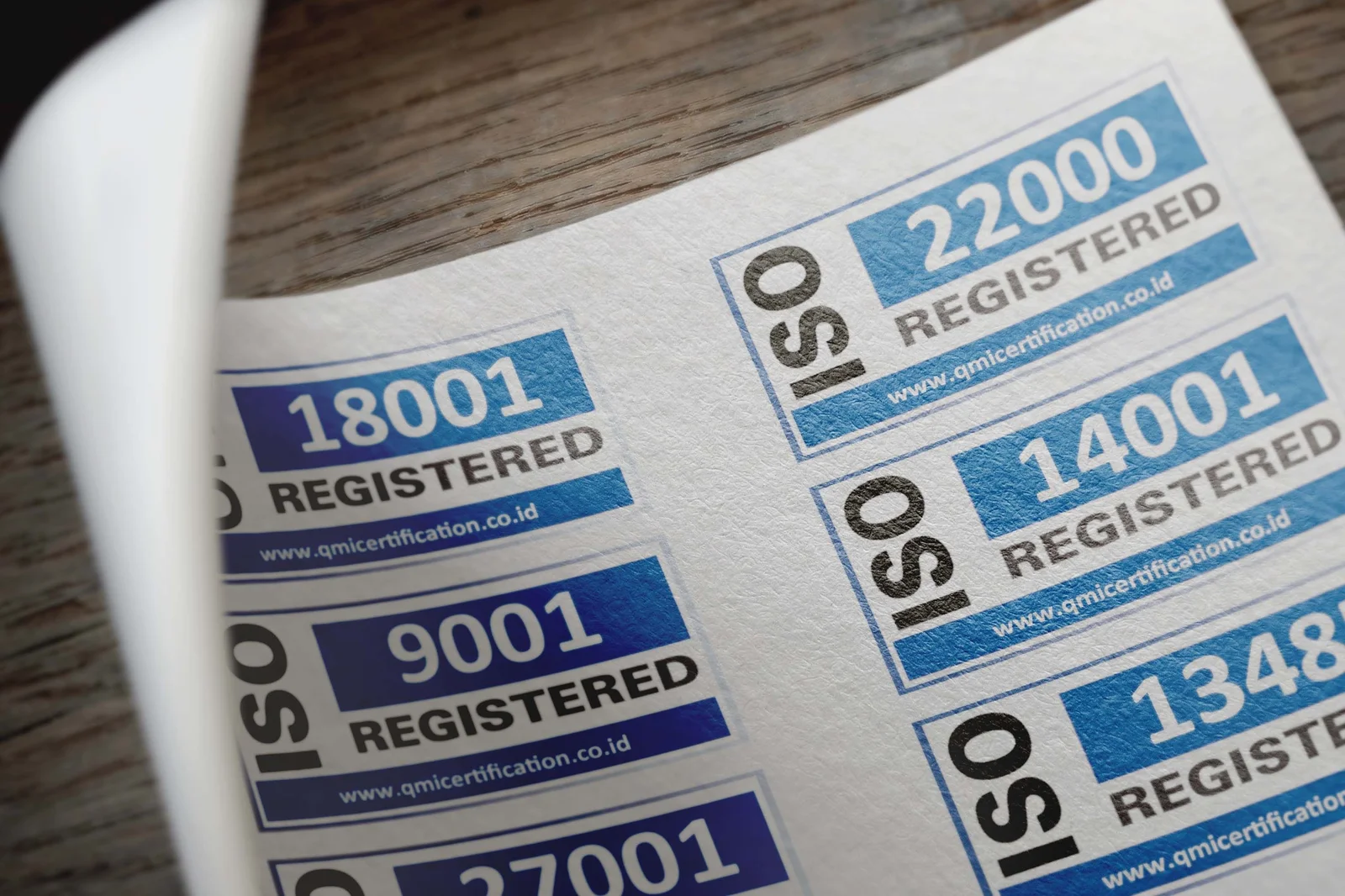
For regulated or safety-sensitive products, request the compliance documents relevant to the destination market before placing the order. These may include declarations of conformity, test reports, certificates, material declarations, safety data sheets, food-contact documentation, electrical safety reports, chemical compliance documents or other product-specific evidence.
Do not assume that a certificate is relevant simply because it contains a familiar logo or standard number. Check the product scope, model numbers, company name, issuing organization, issue date and validity period. A legitimate certificate for one product family does not automatically cover every product the supplier sells.
Buyers should also distinguish between management-system certification and product certification. For example, a factory holding a quality-management certificate does not necessarily prove that a particular product complies with the import requirements of the buyer's market.
Because product rules vary by destination and product type, determine the required evidence before the purchase order is finalized rather than waiting until the shipment is ready. Missing compliance documents can cause customs delays, failed inspections, relabeling costs or an inability to place the product on the market.
Ask for Test Reports When the Product Requires Testing
Where product performance, composition or safety must be demonstrated, request the relevant test reports and review what was actually tested. A useful report should allow the buyer to identify the tested product, laboratory, test method or standard, result and date.
Pay attention to whether the test report applies to the exact model or material being purchased. Suppliers sometimes reuse an older report for a related product, even when the construction, raw material or specification has changed. If the report does not clearly match the ordered item, ask for clarification or new testing where appropriate.
For higher-risk purchases, buyers may also verify the report directly with the laboratory or certification body when that service is available.
Confirm Bank Details Before Sending Money

Banking information deserves separate verification because payment fraud and account-change fraud can occur even when the supplier itself is legitimate. Ask for bank details in a formal document such as the supplier's proforma invoice or company bank-information letter, and compare the beneficiary name with the supplier's legal company name.
A different beneficiary name does not always mean fraud. Some suppliers use related companies, export entities or authorized payment structures. However, the buyer should understand the relationship before transferring funds. Do not rely only on an email stating that the bank account has changed.
If payment instructions change after the order has been negotiated, verify the change through a second communication channel using contact information you already trust. Unexpected bank changes, pressure to pay quickly or instructions to send funds to an unrelated individual or company are signals that require additional verification.
Before paying a substantial deposit, buyers can also review the risk questions in Should You Pay a Supplier 30% Deposit Before Production?.
Use the Proforma Invoice as a Consistency Check
A proforma invoice should bring together many of the commercial details already agreed with the supplier. It should normally identify the seller and buyer, products, quantities, prices, currency, payment terms, delivery term, destination or named place where relevant, and other agreed commercial conditions.
Compare the company name, address and bank information on the proforma invoice with the supplier's registration documents. Also compare the product description with the approved specification and quotation. If the commercial document changes an important term, resolve the discrepancy before payment.
For international purchases, the Incoterm should include a sufficiently precise named place or port where applicable rather than appearing only as a three-letter abbreviation. Clear delivery terms reduce later disputes about freight, customs and destination charges.
Request Quality and Production Evidence Appropriate to the Order

For manufacturers, buyers may request quality-management documentation, inspection procedures, production records, calibration information, material certificates or other evidence relevant to the product and risk level. The purpose is not to create an excessive documentation burden. It is to establish whether the supplier has a repeatable process for controlling the characteristics that matter to the order.
For custom production, it can be useful to agree in advance which records will be available when production is complete. Examples may include batch records, dimensional inspection sheets, material certificates, test results or packaging checks.
Documents should support physical verification rather than replace it. A factory can produce attractive paperwork and still deliver nonconforming goods. For higher-value or higher-risk orders, document review can be combined with production monitoring or a pre-shipment inspection. The timing and purpose of that inspection are explained in When Should You Request a Pre-Shipment Inspection?.
Check Export and Shipping Documents the Supplier Can Provide
Before the first shipment, confirm which commercial and transport documents the supplier will provide and which party is responsible for preparing them. Depending on the transaction, these may include the commercial invoice, packing list, certificate of origin, transport document, export declaration information, inspection certificate, insurance document or other destination-specific paperwork.
Do not assume that every shipment requires the same documents. Requirements vary by destination country, product and trade arrangement. A certificate of origin may be important for customs clearance or preferential tariff treatment in one transaction and unnecessary in another.
Confirm document requirements early enough that the supplier has time to obtain any certificates, legalization, chamber endorsements or third-party reports that may be required. Documentation problems discovered after cargo has been dispatched are usually more difficult and more expensive to correct.
Ask Who Is Authorized to Sign for the Company
For larger contracts or transactions with unusual risk, it may be appropriate to confirm who has authority to sign quotations, contracts, declarations or other binding documents on behalf of the supplier. The evidence available depends on the country and company structure and may include registry information, an authorized-signatory document, power of attorney or other corporate authorization.
This becomes more important when negotiations are handled through an employee using a generic email address, when the contracting entity differs from the factory name, or when a third party will receive payment.
Commercial References Can Support the Document Review
A supplier may also provide trade references, customer references, banking references or information about previous export markets. These are supporting evidence rather than substitutes for company registration and product verification.
References are more useful when the buyer can contact the reference independently and ask specific questions about order history, product type, delivery performance and issue resolution. A list of well-known company logos on a presentation should not be treated as equivalent to a verified customer reference.
Verify Documents Instead of Simply Collecting Them
The most important step comes after the documents arrive. Review them together and look for consistency. The legal company name, registration number, registered address, tax information, website, email domain, invoice details and bank beneficiary should form a coherent picture.
Where possible, verify registration information through official registries, certifications through issuing bodies and test reports through laboratories. Check whether addresses exist, whether phone numbers correspond to the company and whether important certificates are current and relevant to the ordered product.
Document quality also matters. Obvious editing, inconsistent fonts, altered dates, unexplained company names, mismatched certificate scopes or reluctance to provide verifiable information should trigger further checks. These issues overlap with several warning signs described in 10 Red Flags from Suppliers that Buyers Should Never Ignore.
Due diligence should also extend beyond documents when the transaction justifies it. Buyers may use video calls, factory visits, independent company checks, product samples, third-party audits or inspections to verify information that cannot be confirmed from paperwork alone.
Do Not Request Every Possible Document From Every Supplier
A sensible document request should be proportionate to the order. A low-value purchase of a standard product from an established supplier does not require the same level of diligence as a large custom order involving tooling, regulated products or a substantial advance payment.
Request documents because they answer a specific commercial, legal, technical or compliance question. Excessive requests can slow sourcing without reducing risk, while insufficient verification can leave important questions unanswered.
The buyer should therefore divide documents into three groups: core company identity documents, product-specific documents and transaction-specific documents. This keeps the process structured and makes it easier to identify what is still missing.
Practical Document Checklist for a New Supplier
- Business registration certificate or official company extract
- Tax or VAT registration document where applicable
- Registered address and actual factory or warehouse address
- Written product specification, drawing or approved technical sheet
- Relevant product certificates and declarations
- Applicable laboratory test reports
- Quality-management or production-control documents when relevant
- Proforma invoice showing agreed commercial terms
- Bank details with beneficiary information
- Commercial invoice and packing-list capability for export shipments
- Certificate of origin or other special export documents when required
- Authorized-signatory evidence for higher-risk contracts where appropriate
- Trade references when additional commercial verification is needed
What Should Be Verified Before You Pay a New Supplier?
Before sending a significant deposit, make sure the supplier's legal identity has been independently checked, the bank beneficiary has been confirmed, the ordered product is defined in writing and the important compliance requirements have been addressed. If the product requires testing or certification, verify that the documents actually apply to the product you intend to buy.
Also confirm the commercial details that determine the transaction: quantity, price, currency, payment schedule, delivery term, production lead time, packaging and inspection arrangements. Documents are most useful when they support a clearly defined purchase rather than being collected separately from the commercial agreement.
A strong supplier-verification process does not guarantee that every order will be problem-free, but it can expose inconsistencies before they become expensive. The objective is to know who you are paying, what the supplier has agreed to deliver and which evidence supports the claims that matter to your purchase.