Cutlery Manufacturers in France: French Knives & Table Cutlery Suppliers

France is a strong sourcing market for buyers who want cutlery with a clear design identity rather than anonymous commodity pieces. FirmaPanel currently lists 93 approved cutlery products from 23 French suppliers, including steak knives, table knives, kitchen knives, Laguiole-style ranges, stainless-steel flatware and gift-oriented collections.
For retailers, hospitality buyers and distributors, that gives France an interesting position: you can source practical everyday cutlery, but you can also build higher-margin ranges around craftsmanship, handle materials, presentation and recognisable French styling.
French cutlery suppliers to compare
The French supplier base is varied enough to serve very different customers. Some brands lean toward restaurant and steak knives, others toward kitchen knives, premium flatware or giftable table sets. That makes it worth deciding where your range will sit before asking for prices.
 Sabre SAS
 Nogent*** SAS
 André Verdier
SAS SE Tarrerias Bonjean
André Verdier
SAS SE Tarrerias Bonjean
 OPINEL SAS
 GOYON-CHAZEAU Coutellerie
 Forge de Laguiole Sarl
 DEGRENNE
Examples from FirmaPanel's French cutlery inventory
The products below show why “French cutlery” is too broad for a useful buying request. A coloured table set, a Laguiole-style knife, a professional kitchen knife and a premium steak-knife collection may all come from France, but they are aimed at different customers and price points.
Before contacting suppliers, choose the job the product needs to do: everyday dining, restaurant service, specialist kitchen use, gifting or premium homeware. That one decision makes supplier replies far more relevant.
 Bistrot Gold Solid Ivory Cutlery Set
 Nogent French Knives since 1923
 Laguiole Essentiel Par Andre Verdier
 Laguiole Made in France Knife
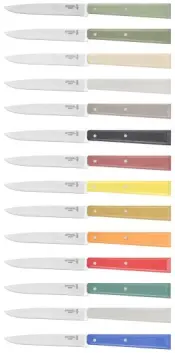 Opinel Bon Appetit New Colors Knives
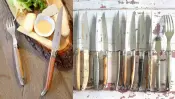 LAGUIOLE Knives and Cutlery
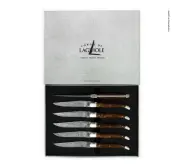 Forge de Laguiole Table Damas Knives
 DEGRENNE ACROPOLE Fluted Cutlery Collection
French cutlery often sells on character, not only specification
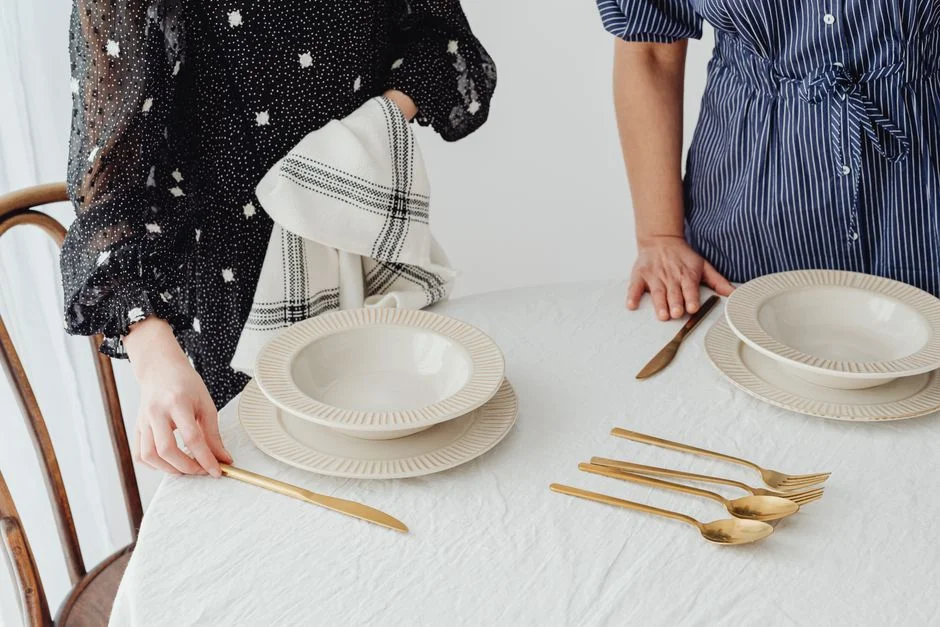
With many cutlery categories, buyers can compare weight, steel grade and price and get reasonably close to the answer. French table cutlery often adds another factor: visual identity.
Handle colour, shape, finish and presentation can be the reason a customer chooses one set over another. This is especially important for boutique homeware stores, gifting, hospitality projects and premium ecommerce, where a distinctive collection can justify a better retail margin.
When comparing ranges, ask for complete lifestyle images as well as technical data. A product that looks ordinary in a spreadsheet may become much more attractive when shown as part of a finished table setting.
Table knives and kitchen knives should not be bought the same way
A table or steak knife is judged heavily on comfort, balance, appearance and how it performs during normal dining. A kitchen knife has a different set of priorities: blade geometry, edge retention, sharpening, steel, handle grip and repeated professional use.
If you are buying both, separate them in the RFQ. Asking one supplier for “French knives” can lead to a mixed catalogue that is difficult to compare. A better request might specify six-piece steak knife sets for hospitality, or 20 cm chef knives for specialist retail.
Buyers comparing French kitchen-knife sourcing with another premium production market may also find Cutlery Manufacturers in Japan: Japanese Kitchen Knife Suppliers useful. The Japanese page focuses more heavily on blade steel and kitchen performance, while French ranges often combine function with a stronger table and lifestyle story.
Handle material can change the whole product position
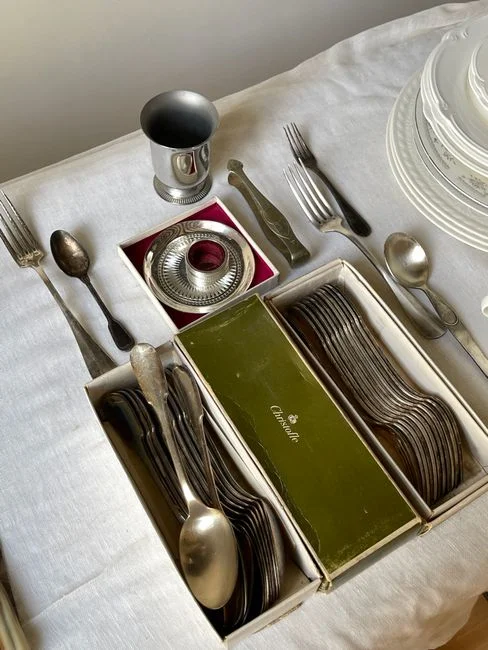
Wood, resin, coloured synthetic handles, stainless steel and decorative finishes can move two otherwise similar knives into completely different retail categories.
Natural wood can support a more traditional or premium story, but buyers should expect some variation between pieces. Coloured synthetic handles may be easier for coordinated collections and repeat orders. Metal handles create a cleaner, more formal look and can suit hospitality where durability and easy cleaning matter.
Ask whether replacement pieces can be ordered later. For restaurants and hotels, being able to replace lost knives or forks without rebuying the entire set is a real operational benefit.
Do not underestimate the value of a coherent collection
A good cutlery range should make future purchasing easier. If one design is available as table knives, forks, spoons, teaspoons and serving pieces, a retailer can expand the collection without introducing a new visual language every season.
The same applies to hospitality. Hotels and restaurants usually benefit from ranges that can be reordered consistently and expanded when seating capacity changes.
For buyers building a larger tabletop offer around cutlery, plates, bowls and drinkware, Wholesale Tableware Suppliers: Source Cutlery, Plates, Bowls and Drinkware is a useful next step. It helps connect the cutlery decision to the rest of the table rather than treating it as an isolated category.
Presentation can justify a higher selling price

Premium cutlery is often bought as a gift or as part of a carefully designed homeware purchase. A good box, sleeve or presentation case can therefore add real commercial value rather than simply cost.
Ask suppliers whether the same product can be supplied in bulk, retail packaging and gift packaging. That can let one product serve several sales channels. For ecommerce, request packed dimensions and weight as well—the most beautiful gift box is less attractive if it makes parcel shipping unnecessarily expensive.
What should go into the first buying brief?
Keep it practical. State the cutlery type, number of pieces per set, target customer, material or finish, quantity, packaging style and destination country. Add dishwasher requirements, private-label needs or replacement-piece availability if they matter to your business.
For a hospitality project, include the number of covers and whether you expect regular replenishment. For retail, include the target selling-price level so suppliers can suggest collections that make commercial sense.
Request quotes from French cutlery suppliers
Once the product type and market position are clear, send the same brief through Post RFQ. A consistent request makes it much easier to compare design, MOQ, packaging, lead time and price without losing sight of the customer you are actually buying for.
Start an RFQ