Cutlery Manufacturers in Germany: German Flatware & Knife Suppliers
Germany is a useful sourcing market when the buyer cares as much about specification and repeatability as appearance. FirmaPanel currently lists 96 approved products in the Cutlery category from 32 German suppliers, with genuine depth in stainless-steel flatware, steak knives, kitchen knives and professional food-processing knives.
The category is not perfectly clean—there are a few unrelated household products mixed in—so buyers should focus on suppliers whose current ranges clearly match the intended use. A hotel flatware program, a premium kitchen-knife line and a butcher-knife range should be compared with different criteria.
German cutlery suppliers worth comparing
The suppliers below represent several useful parts of the market: coordinated flatware, professional knives, forged kitchen knives, steak knives and food-service ranges. Starting with the correct product family keeps the quotation process much more focused.
 BURGVOGEL Cutlery GmbH
 cilio tisch-accessoires GmbH
 EDREI e.K. / EIKASO
 Franz Güde GmbH
 Johannes Giesser Messerfabrik GmbH
 Picard & Wielpütz GmbH & Co KG
 solex GERMANY GmbH
 Wüsthof GmbH
Examples from the current FirmaPanel inventory
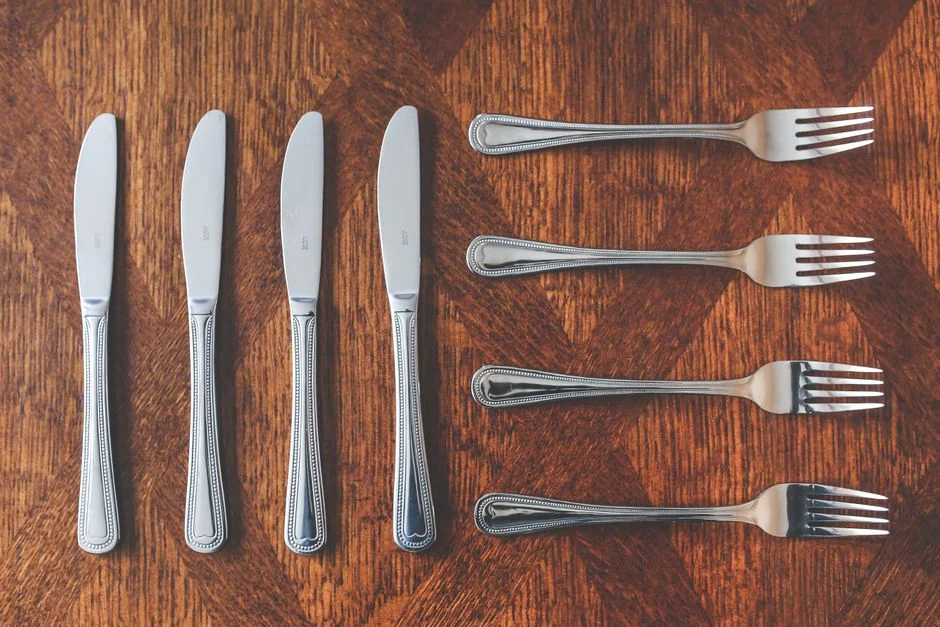
The live inventory includes hammered stainless flatware, olive-wood handled knives, forged gastro knives, German kitchen-knife lines, boning knives, conventional table cutlery and steak-knife sets. That gives buyers enough choice to build either a tabletop program or a more specialist knife assortment.
Before requesting prices, decide the exact job: “polished stainless hotel flatware with loose replacement pieces” or “20 cm chef knife with professional handle for food-service distributors” is much easier to quote than a general request for German cutlery.
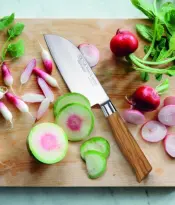 BURGVOGEL Oliva Line Olive Wood Knives
 cilio Hammered Stainless Steel Cutlery Sets
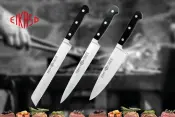 EIKASO Gastro Series Forged Knives
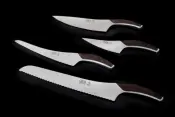 Gude Synchros Knife Line
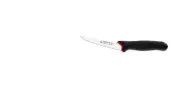 PrimeLine Black Boning Knife 13 cm
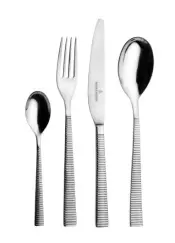 Lina 6168 Cutlery
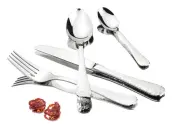 Solex Lena Cutlery
 Ikon Selection Steak Knife Set
For flatware, consistency matters more than novelty

A restaurant or hotel usually values a line that can be reordered more than a line that changes every season. Forks disappear, teaspoons are lost, and knives get damaged. If the supplier can provide individual replacement pieces from the same collection, the original purchase becomes much easier to maintain.
Ask whether the pattern is part of a continuing range, whether loose pieces can be reordered and how the factory controls surface finish between batches. A replacement fork should not look obviously different from the stock already on the table.
Steel specification is only the beginning
For table cutlery, ask about steel grade where relevant, but also ask for thickness, piece weight, polishing and edge finishing. Two forks with similar material descriptions can feel completely different in the hand.
For knives, the comparison changes. Blade steel, hardness where specified, blade geometry, sharpening behaviour and handle construction become more important than the material used for a spoon in the same catalogue.
Buyers looking specifically at specialist knife sourcing can also compare Cutlery Manufacturers in Japan: Japanese Kitchen Knife Suppliers, where the inventory leans much more heavily toward Japanese kitchen knives.
A knife should be judged after cutting, not after unboxing
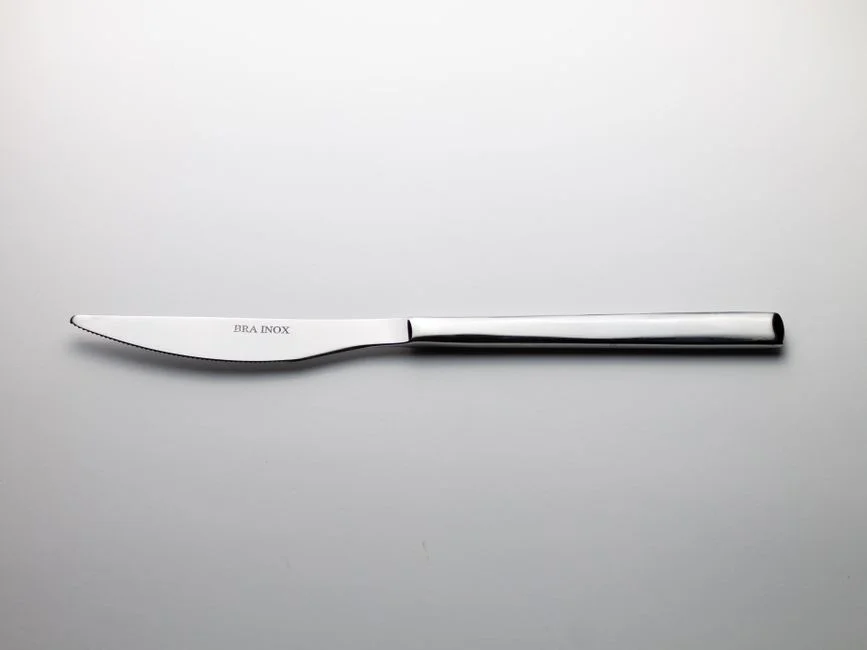
Knife samples need to be used. Test the chef knife, boning knife or steak knife against the food and working environment it is meant for. Look at balance, grip, edge retention and how easily the blade can be maintained.
For professional food service, an ornate handle may be less useful than a secure grip that works with wet hands. For retail, presentation and handle material can carry more weight. The right choice depends on who will use the knife every day.
Ask suppliers for care and sharpening guidance as part of the product information. A good knife becomes a much easier product to sell when the buyer can explain how it should be maintained.
Forged and stamped knives belong in different price discussions
Forged knives often target a heavier or more premium position, while stamped knives can work very well for professional or high-volume applications where weight, cleaning and replacement cost matter more.
Do not assume one construction is automatically better for every customer. Ask about the intended use, blade thickness and manufacturing method, then compare samples in the same application.
Hospitality buyers should define the service pieces first
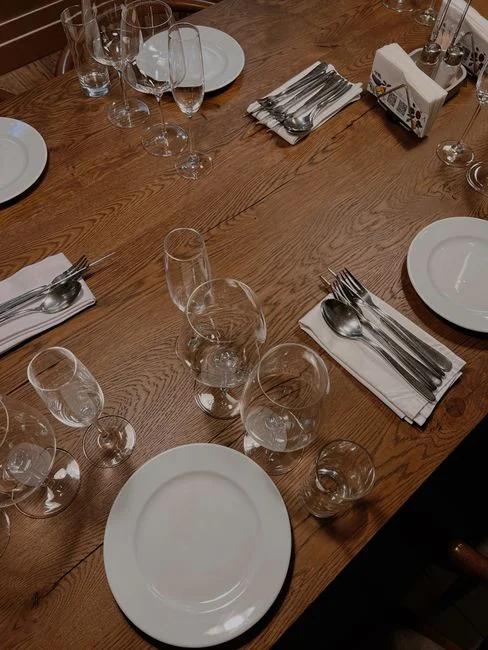
A cutlery range becomes expensive very quickly if the buyer adds every available piece. Start with the service that will actually be laid on the table: dinner fork, table knife, tablespoon and teaspoon may be enough for one operation, while another may genuinely need dessert, fish or specialist pieces.
Retail buyers face the same issue in boxed sets. A 30-piece set is not necessarily a better product than a 24-piece set if the extra pieces do not match how the customer eats.
For broader tabletop sourcing across plates, bowls and drinkware, Wholesale Tableware Suppliers: Source Cutlery, Plates, Bowls and Drinkware helps put cutlery into the context of the complete table rather than choosing it in isolation.
Packaging should protect edges without wasting space
Flatware is relatively dense and easy to carton efficiently, but polished surfaces can scratch if pieces rub together. Knife packaging has another job: it has to protect the edge and protect the person opening the carton.
Ask whether professional knives ship with sleeves, guards or individual boxes and whether retail sets include inserts that prevent movement. Request carton dimensions and gross weight so that two apparently similar quotations can be compared on landed cost rather than unit price alone.
Private label works best when the core product stays proven
For a first private-label order, it can make sense to use an existing proven knife or flatware pattern and change the branding, packaging, engraving or presentation rather than developing a completely new tool or shape.
Ask which customisations share the normal MOQ and which require a larger run. Logo engraving, gift boxes and printed sleeves may each have different minimum quantities.
Request quotes from German cutlery manufacturers
Send suppliers the exact product family, sizes or pieces required, quantity, material or steel preference, finish, packaging style and destination country. For knives, include the intended professional or retail use; for hospitality flatware, state whether loose replacement pieces are required.
Then send the same buying brief through Post RFQ so suppliers can be compared on specification, continuity, packaging, MOQ and price rather than on unrelated catalogue items.
Start an RFQ