MOQ
—
Category
Cutlery
Product details
Yaxell ZEN Stainless Steel
Yaxell ZEN
Blade
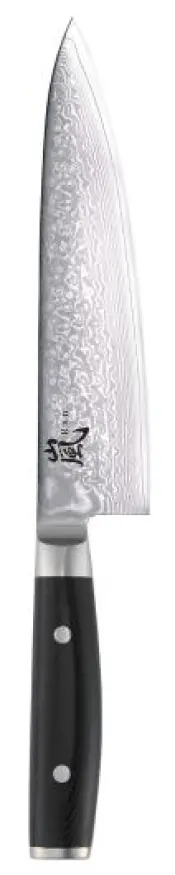
The value Damascus knife was developed to m eet the increasing market demand of "JAPAN FANS" in world markets.
The core material is VG10 "super stainless steel", which is covered by 18 layers of soft and hard high-carbon stainless steel on each side, producing 37-layer, rust-free Damascus-blade. The hammer marks on the upper part of the blade make it look very artistic. Further, the logo is stamped, not etched. Of course the blade has an extremely sharp cutting-angle with the hardness rating of HRC61 on the Rockwell scale.
Handle
The handle is made out of FDA-approved black Canvas-Micarta, which is an enormously solid and durable material made of resin and linen. This material lasts decades. Different from ot her material, it is non-shrink and odorless. It is polished perfectly and fastened tightly by two stainless steel rivets.
膳ZEN is a registered trade mark of Yaxell Corporation.
This word means‘ the most healthy meals’ in Japanese.
Source with clarity
Interested in this product?
Ask Yaxell Corporation about pricing, availability, customization, and delivery requirements in one private inquiry.
- Private buyer–supplier conversation
- Free buyer account
- Keep messages and quotes organized
From this supplier
View vendor profile
More from Yaxell Corporation
Explore more approved listings published by the same company.

Compare the market
Browse category
Related products
Review similar products from other suppliers in this category.

Sourcing intelligence
Practical guides for global trade
Recent FirmaPanel articles for evaluating suppliers, sourcing products, and preparing export conversations.
 Trade guide
Should You Ask for Samples Before Placing a Bulk Order?
Learn when to request product samples before placing a bulk order, what samples can and cannot prove, and how buyers should use sampling to reduce sourcing risk.
Read article
Trade guide
Should You Ask for Samples Before Placing a Bulk Order?
Learn when to request product samples before placing a bulk order, what samples can and cannot prove, and how buyers should use sampling to reduce sourcing risk.
Read article
 Trade guide
How Much Should You Really Order From a New Supplier?
Learn how to size a first order from a new supplier using MOQ, demand, lead time, freight, quality risk and cash exposure instead of unit price alone.
Read article
Trade guide
How Much Should You Really Order From a New Supplier?
Learn how to size a first order from a new supplier using MOQ, demand, lead time, freight, quality risk and cash exposure instead of unit price alone.
Read article
 Trade guide
Should You Use DDP When Importing from China?
Learn when DDP shipping from China can simplify importing, where customs and tax risks appear, and when DAP or FCA may be a safer choice.
Read article
Trade guide
Should You Use DDP When Importing from China?
Learn when DDP shipping from China can simplify importing, where customs and tax risks appear, and when DAP or FCA may be a safer choice.
Read article