MOQ
—
Category
Pens
Product details
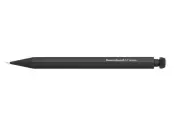
Kaweco LILIPUT Eco Brass Ball Pen
The ball pen with cap made from brass is particularly sustainable. It is made entirely from the well-known German Eco brass thus goes through very short transport routes. The brass used is lead-free and, since it is untreated, develops an individual patina over time.
This ball pen has the same look of a fountain pen when it's closed. It fits perfectly into any pocket and grows to regular size as soon as you attach the cap onto the barrel. By doing this, it has a perfect shape for writing.
It only measures 9.7 cm when closed, just 8.7 cm when opened, and 12.5 cm when the cap is attached to the barrel.
As a standard, the pen includes a blue 1.0 mm refill. Our normed refills are available in black and blue in the stroke width of 0.8 mm, 1.0 mm and 1.2 mm. Additionally, we offer a red 1.0 mm refill.
Suitable for the pen, we offer a clip made from bronze and great leather cases to protect the pen on the go.
Source with clarity
Interested in this product?
Ask Kaweco - h & m gutberlet GmbH about pricing, availability, customization, and delivery requirements in one private inquiry.
- Private buyer–supplier conversation
- Free buyer account
- Keep messages and quotes organized
From this supplier
View vendor profile
More from Kaweco - h & m gutberlet GmbH
Explore more approved listings published by the same company.
Compare the market
Browse category
Related products
Review similar products from other suppliers in this category.

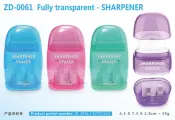
Pens
Sharpener Pen Stationery
Zhejiang Zhengda Stationery Manufacturing Co., Ltd.
China, Wenzhou Zhejiang
Sourcing intelligence
Practical guides for global trade
Recent FirmaPanel articles for evaluating suppliers, sourcing products, and preparing export conversations.
 Trade guide
Should You Ask for Samples Before Placing a Bulk Order?
Learn when to request product samples before placing a bulk order, what samples can and cannot prove, and how buyers should use sampling to reduce sourcing risk.
Read article
Trade guide
Should You Ask for Samples Before Placing a Bulk Order?
Learn when to request product samples before placing a bulk order, what samples can and cannot prove, and how buyers should use sampling to reduce sourcing risk.
Read article
 Trade guide
How Much Should You Really Order From a New Supplier?
Learn how to size a first order from a new supplier using MOQ, demand, lead time, freight, quality risk and cash exposure instead of unit price alone.
Read article
Trade guide
How Much Should You Really Order From a New Supplier?
Learn how to size a first order from a new supplier using MOQ, demand, lead time, freight, quality risk and cash exposure instead of unit price alone.
Read article
 Trade guide
Should You Use DDP When Importing from China?
Learn when DDP shipping from China can simplify importing, where customs and tax risks appear, and when DAP or FCA may be a safer choice.
Read article
Trade guide
Should You Use DDP When Importing from China?
Learn when DDP shipping from China can simplify importing, where customs and tax risks appear, and when DAP or FCA may be a safer choice.
Read article