
MOQ
—
Category
Plates
Product details
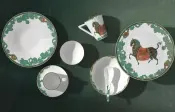
Dragon Patterns on Bronze Collection
Artist Musa's *Transforming into a Dragon* draws inspiration from the serpentine form of ancestral figures in classical Chinese mythology. The piece is presented in the style of ancient Chinese bronze ware, with murals serving as its foundational aesthetic. Delicate lines a n d t h e distinctive cyan-green and ochre hues of traditional Chinese painting depict the power of breaking free from a cocoon, emphasizing the tenacity and beauty of life. The "transformation into a dragon" in the work not only symbolizes struggling free from adversity but also represents the spirit of perseverance in the face of challenges— constant evolution and continuous progress. This spirit reflects the journey from the ordinary to the extraordinary in the pursuit of freedom and dreams, conveying the idea of relentless effort amid hardships to ultimately achieve self-transcendence. The work also carries wishes and blessings for all the beauty and success of the coming new year.
Source with clarity
Interested in this product?
Ask Kiln and Craft about pricing, availability, customization, and delivery requirements in one private inquiry.
- Private buyer–supplier conversation
- Free buyer account
- Keep messages and quotes organized
From this supplier
View vendor profile
More from Kiln and Craft
Explore more approved listings published by the same company.

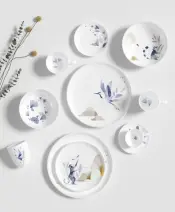
Compare the market
Browse category
Related products
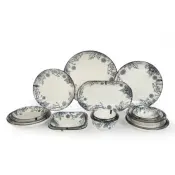
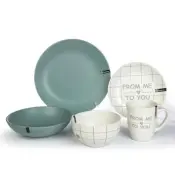
Review similar products from other suppliers in this category.


Sourcing intelligence
Practical guides for global trade
Recent FirmaPanel articles for evaluating suppliers, sourcing products, and preparing export conversations.
 Trade guide
Should You Ask for Samples Before Placing a Bulk Order?
Learn when to request product samples before placing a bulk order, what samples can and cannot prove, and how buyers should use sampling to reduce sourcing risk.
Read article
Trade guide
Should You Ask for Samples Before Placing a Bulk Order?
Learn when to request product samples before placing a bulk order, what samples can and cannot prove, and how buyers should use sampling to reduce sourcing risk.
Read article
 Trade guide
How Much Should You Really Order From a New Supplier?
Learn how to size a first order from a new supplier using MOQ, demand, lead time, freight, quality risk and cash exposure instead of unit price alone.
Read article
Trade guide
How Much Should You Really Order From a New Supplier?
Learn how to size a first order from a new supplier using MOQ, demand, lead time, freight, quality risk and cash exposure instead of unit price alone.
Read article
 Trade guide
Should You Use DDP When Importing from China?
Learn when DDP shipping from China can simplify importing, where customs and tax risks appear, and when DAP or FCA may be a safer choice.
Read article
Trade guide
Should You Use DDP When Importing from China?
Learn when DDP shipping from China can simplify importing, where customs and tax risks appear, and when DAP or FCA may be a safer choice.
Read article