How to Set Minimum Order Quantity for Export Customers
 A minimum order quantity should protect the exporter from setup, purchasing, packaging and handling costs that cannot be recovered on very small orders. It should not be an arbitrary number copied from a competitor or applied to every customer and product in the same way.
The most useful MOQ is the lowest quantity at which the order can be produced, packed, documented and shipped at an acceptable margin and operational risk.
Understand what the MOQ is protecting
Different constraints can create different minimums:
- Production setup or machine changeover
- Raw-material supplier minimums
- Batch size or process yield
- Printing and custom packaging minimums
- Carton or pallet configuration
- Laboratory testing or certification cost
- Administrative and export-document cost
- Freight efficiency
- Target order value
The highest unavoidable constraint often becomes the practical MOQ, but the commercial team should still examine alternatives.
Calculate setup cost per unit
A factory may spend the same amount on machine setup, cleaning, colour change, tooling installation or quality approval whether it produces 100 or 5,000 units.
If setup costs USD 600, the setup cost per unit is:
| Order quantity | Setup cost per unit |
|---|---|
| 100 units | USD 6.00 |
| 500 units | USD 1.20 |
| 1,000 units | USD 0.60 |
| 5,000 units | USD 0.12 |
This does not automatically mean the MOQ must be 5,000. It means smaller quantities need a higher price or a separately stated setup charge.
Check raw-material purchasing constraints
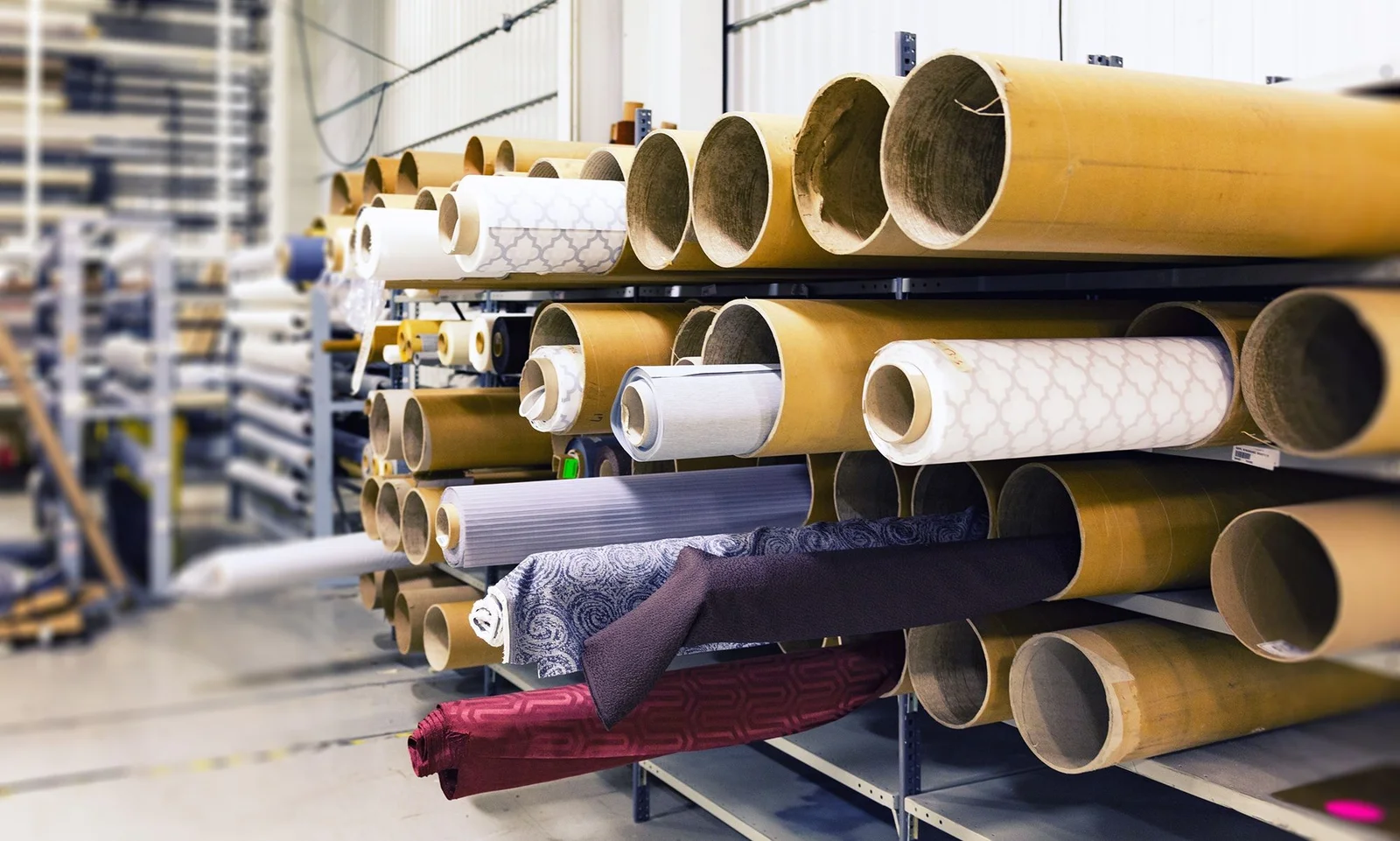 Materials may be sold in coils, sheets, rolls, batches, drums or full colour lots. The exporter should calculate how much finished product one minimum material purchase can produce and what happens to the remainder.
If leftover material can be used for other customers, the full material minimum does not always need to be assigned to one order. If the colour, formulation or specification is customer-specific, the buyer may need to purchase the full batch or pay for unused stock.
Include packaging minimums
Custom boxes, labels, printed bags and instruction manuals frequently have their own MOQs. A factory may be able to produce 300 products while the packaging printer requires 2,000 boxes.
Options include:
- Use standard neutral packaging for the trial order
- Apply a label instead of fully printed packaging
- Charge the buyer for the full packaging run and store the balance
- Use digital printing where suitable
- Increase the product MOQ to match packaging consumption
State storage periods and ownership of unused packaging in writing.
Use carton, pallet and container multiples
MOQ should reflect sensible packing units. If one carton holds 24 pieces, quoting an MOQ of 250 creates a partial carton. If one pallet holds 960 pieces, a 1,000-piece MOQ may be practical only when the extra 40 pieces can be packed safely.
Do not force every order into a full container. Less-than-container shipments, consolidation and pallet orders can be appropriate when the product value supports the freight.
Separate production MOQ from commercial MOQ
Production MOQ is the minimum a process can make efficiently. Commercial MOQ is the minimum order the company is willing to accept after considering administration, credit, documentation and sales effort.
A company may have a production MOQ of 200 units but require a minimum export order value of USD 5,000. In that case, the buyer may combine several products to reach the commercial minimum.
Offer a minimum order value for mixed orders
 A minimum order value can be more flexible than a fixed quantity when the exporter sells a broad range. For example:
- Minimum USD 5,000 total order
- Minimum one master carton per SKU
- Maximum ten SKUs in a trial order
This approach allows distributors to test a collection while protecting warehouse and document-handling efficiency.
Price trial orders differently
A trial order does not need to use the production-order price. The exporter can recover fixed costs through:
- A higher unit price
- A separate setup charge
- Paid samples
- Standard packaging
- Limited colours or models
- Advance payment
Be transparent. Buyers generally understand that a 100-unit trial cannot have the same unit price as a 10,000-unit order.
Set quantity breaks
Instead of providing only one MOQ and one price, show meaningful quantity levels based on cost changes:
| Quantity | Commercial basis |
|---|---|
| 250 units | Trial order, standard colour and packaging |
| 1,000 units | Production order, standard packaging |
| 3,000 units | Custom colour and printed packaging |
| 10,000 units | Volume pricing subject to production schedule |
Each break should correspond to a real saving or service change, not an invented discount.
Consider customization separately
OEM, ODM and private-label projects often require higher minimums because of development, testing, tooling and packaging. Use separate minimums for:
- Logo application
- Custom colour
- Custom dimensions
- New formulation
- Exclusive packaging
- New mold or tooling
For a full explanation, see OEM, ODM and Private Label Export Explained for Manufacturers.
Calculate MOQ from a target contribution
A simple commercial method is to calculate the contribution per unit after variable costs, then divide the fixed order cost by that contribution.
Break-even quantity = fixed order costs ÷ contribution per unit
If fixed order costs are USD 800 and each unit contributes USD 2 toward fixed costs and profit, 400 units cover the fixed cost. The MOQ should then include the company’s required profit and any production or packaging constraints.
Do not use freight as the only MOQ rule
A full container may produce the lowest freight cost per unit, but many buyers need to test demand first. Forcing a container MOQ can eliminate qualified distributors and retailers.
Instead, show the buyer how freight efficiency changes by shipment size. The buyer can then compare a pallet trial with a larger consolidated or container order.
Review MOQ by market and channel
The appropriate MOQ for an importer-distributor may be different from the MOQ for a retail chain, online seller, project buyer or hospitality customer. Market size, product value and replenishment frequency all matter.
A new market may justify a controlled trial MOQ, while an established exclusive distributor may commit to annual volume with scheduled releases.
Explain the MOQ in the quotation
 A useful quotation does not simply state “MOQ: 1,000.” It explains the basis and alternatives:
MOQ is 1,000 units per colour with printed retail packaging. For a first trial, we can offer 250 units in standard packaging at the trial-order price shown below.
This turns the MOQ from a rejection into a commercial choice.
Review minimums regularly
Material prices, machine capacity, packaging suppliers and order-processing costs change. Review MOQ data by product rather than leaving the same figure in the price list for years.
Track small-order profitability, leftover materials, packaging stock and production disruption. These records show whether the MOQ is too low, too high or poorly structured.
Export MOQ checklist
- Calculate setup and order-specific fixed costs.
- Check material, process and packaging minimums.
- Use sensible carton and pallet multiples.
- Separate production MOQ from commercial minimum value.
- Offer paid trials or standard packaging where practical.
- Create quantity breaks based on real cost changes.
- Set separate minimums for customization.
- Explain the reason and available alternatives.
- Review profitability and unused stock after each order.
MOQ should support profitable production without blocking every new buyer. When the cost structure is visible, exporters can provide flexible trial options while protecting margins and operational efficiency.