MOQ
—
Categoria
Posate
Dettagli del prodotto
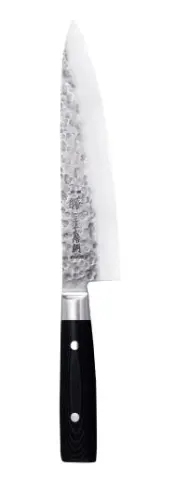
Yaxell RAN Stainless Steel
Yaxell RAN
Blade
The core material VG10 "super steel" is composed of Cobalt, Molybdenum, Vanadium and Carbon. VG10 stainless steel is clad with 34 layers of soft and hard high-carbon stainless steel on each side, producing 69 layered rust-resistant Damascus-look.
The blade has an extremely sharp cutting-angle.
Our special heat treatment gives our blades the outstanding hardness rating of HRC61 on the Rockwell scale, ensuring long lasting cutting performance.
Handle
The handle is made out of FDA-approved black Canvas-Micarta, which is an odorless and enormously durable material made of resin and linen. This material lasts decades. The end of the handle is made out of stainless steel, which gives the knife outstanding stability. Two stainless steel rivets fasten the handle tightly.
Source with clarity
Interested in this product?
Ask Yaxell Corporation about pricing, availability, customization, and delivery requirements in one private inquiry.
- Private buyer–supplier conversation
- Free buyer account
- Keep messages and quotes organized
From this supplier
View vendor profile
More from Yaxell Corporation
Explore more approved listings published by the same company.

Compare the market
Browse category
Prodotti correlati
Review similar products from other suppliers in this category.


Sourcing intelligence
Practical guides for global trade
Recent FirmaPanel articles for evaluating suppliers, sourcing products, and preparing export conversations.
 Trade guide
Dovresti richiedere campioni prima di effettuare un ordine all'ingrosso?
Scopri quando richiedere campioni di prodotto prima di effettuare un ordine all'ingrosso, cosa possono e non possono dimostrare i campioni e come gli acquirenti dovrebbero utilizzare il campionamento per ridurre il rischio di approvvigionamento.
Read article
Trade guide
Dovresti richiedere campioni prima di effettuare un ordine all'ingrosso?
Scopri quando richiedere campioni di prodotto prima di effettuare un ordine all'ingrosso, cosa possono e non possono dimostrare i campioni e come gli acquirenti dovrebbero utilizzare il campionamento per ridurre il rischio di approvvigionamento.
Read article
 Trade guide
Quanto dovresti davvero ordinare da un nuovo fornitore?
Scopri come dimensionare un primo ordine da un nuovo fornitore utilizzando MOQ, domanda, tempi di consegna, costi di spedizione, rischio di qualità e esposizione di cassa invece del solo prezzo unitario.
Read article
Trade guide
Quanto dovresti davvero ordinare da un nuovo fornitore?
Scopri come dimensionare un primo ordine da un nuovo fornitore utilizzando MOQ, domanda, tempi di consegna, costi di spedizione, rischio di qualità e esposizione di cassa invece del solo prezzo unitario.
Read article
 Trade guide
Dovresti usare DDP quando importi dalla Cina?
Scopri quando la spedizione DDP dalla Cina può semplificare l'importazione, dove si presentano rischi doganali e fiscali, e quando DAP o FCA possono essere una scelta più sicura.
Read article
Trade guide
Dovresti usare DDP quando importi dalla Cina?
Scopri quando la spedizione DDP dalla Cina può semplificare l'importazione, dove si presentano rischi doganali e fiscali, e quando DAP o FCA possono essere una scelta più sicura.
Read article