MOQ
—
Catégorie
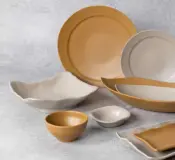
Assiettes
Détails du produit
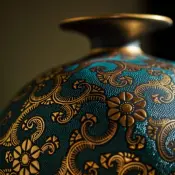
Seigado Tsuiki Metalwork
Tsuiki, meaning “to raise by hammering,” is
a metalworking technique that shapes a single sheet
of metal—often copper—into a vessel through repeated
hammering. Using specialized hammers and anvils,
artisans form a flat plate into a hollow shape, even
creating curves and spouts without molds. Because
the metal hardens as it’s worked, it is periodically
softened by heating. Surfaces are finished with engraving,
hammered textures, and patination using rokusho
and copper sulfate. The craft developed in 18th-century
Niigata, where copper production supported
skilled metalwork.
Seigado carries this heritage forward, producing copper
and tin pieces shaped and finished by hand. Tin, prized
in Japan for its purity and resistance to decay, is used
to make sake cups that soften the flavor of sake.
In copperware, Seigado is known for its nuanced
coloration—indigo blue, golden brown, red, purple,
and warm gold—each adjusted by hand according
to daily conditions. With use, their metalware gains
a deeper patina and character.
Source with clarity
Interested in this product?
Ask MUSUBI KILN about pricing, availability, customization, and delivery requirements in one private inquiry.
- Private buyer–supplier conversation
- Free buyer account
- Keep messages and quotes organized
From this supplier
View vendor profile
More from MUSUBI KILN
Explore more approved listings published by the same company.



Compare the market
Browse category
Produits associés
Review similar products from other suppliers in this category.
Sourcing intelligence
Practical guides for global trade
Recent FirmaPanel articles for evaluating suppliers, sourcing products, and preparing export conversations.
 Trade guide
Devez-vous demander des échantillons avant de passer une commande en gros ?
Découvrez quand demander des échantillons de produits avant de passer une commande en gros, ce que les échantillons peuvent et ne peuvent pas prouver, et comment les acheteurs doivent utiliser l'échantillonnage pour réduire les risques d'approvisionnement.
Read article
Trade guide
Devez-vous demander des échantillons avant de passer une commande en gros ?
Découvrez quand demander des échantillons de produits avant de passer une commande en gros, ce que les échantillons peuvent et ne peuvent pas prouver, et comment les acheteurs doivent utiliser l'échantillonnage pour réduire les risques d'approvisionnement.
Read article
 Trade guide
Combien devriez-vous vraiment commander auprès d'un nouveau fournisseur ?
Apprenez à dimensionner une première commande auprès d'un nouveau fournisseur en utilisant le MOQ, la demande, le délai de livraison, le fret, le risque de qualité et l'exposition au cash au lieu de se baser uniquement sur le prix unitaire.
Read article
Trade guide
Combien devriez-vous vraiment commander auprès d'un nouveau fournisseur ?
Apprenez à dimensionner une première commande auprès d'un nouveau fournisseur en utilisant le MOQ, la demande, le délai de livraison, le fret, le risque de qualité et l'exposition au cash au lieu de se baser uniquement sur le prix unitaire.
Read article
 Trade guide
Devez-vous utiliser DDP lors de l'importation depuis la Chine ?
Découvrez quand l'expédition DDP depuis la Chine peut simplifier l'importation, où apparaissent les risques douaniers et fiscaux, et quand DAP ou FCA peuvent être un choix plus sûr.
Read article
Trade guide
Devez-vous utiliser DDP lors de l'importation depuis la Chine ?
Découvrez quand l'expédition DDP depuis la Chine peut simplifier l'importation, où apparaissent les risques douaniers et fiscaux, et quand DAP ou FCA peuvent être un choix plus sûr.
Read article