When Should You Negotiate MOQ With a Supplier?

Minimum order quantity, or MOQ, is one of the first commercial terms buyers notice when comparing suppliers. A factory may quote 1,000 units, 500 pieces, one pallet or one full carton as its minimum. Buyers often respond by asking for a lower number immediately.
That can work, but it is not always the best time or the best way to negotiate. MOQ is usually connected to production setup, packaging, raw-material purchasing, labor, printing, freight efficiency and the supplier's own minimum economic batch size. If you ask for a lower MOQ without understanding what creates the minimum, you may get a higher unit price, worse packaging, a longer lead time or a supplier that agrees reluctantly and later treats the order as a low priority.
The better question is not simply, “Can you reduce the MOQ?” It is, “When does it make commercial sense to negotiate MOQ, and what can I offer in return?”
For most buyers, the right time is after the product and supplier look suitable, but before the purchase order is finalized. At that point, you know enough about the specification, price and demand to negotiate intelligently, while both sides still have room to adjust the commercial structure.
What Does MOQ Actually Mean?
MOQ is the smallest quantity a supplier is normally willing to accept for a particular order. It may be defined in units, cartons, kilograms, square meters, sets or another production measure.
The number can come from several different constraints. A supplier may need to buy a minimum quantity of raw material. A printing machine may require a setup run that is uneconomical below a certain volume. Custom packaging may have its own minimum from a packaging supplier. Labor and machine setup may create a fixed cost that needs to be spread across enough units.
In some cases, the MOQ is a genuine production constraint. In other cases, it is a commercial preference. The supplier may simply prefer larger orders because they are easier to schedule and more profitable.
This distinction matters. A buyer has more room to negotiate when the MOQ is based on commercial preference than when it is tied to tooling, raw materials or packaging that genuinely cannot be purchased in smaller quantities.
Do Not Negotiate MOQ Before You Know What You Are Buying
One common mistake is trying to reduce MOQ in the first message before the product specification is clear. This makes the discussion too abstract.
The supplier does not yet know whether the product is standard or custom, whether special packaging is required, whether you need private labeling, whether you will reorder or whether the requested quantity creates extra work.
First clarify the product, material, dimensions, packaging, branding, quality level and delivery requirement. Once the supplier understands the actual order, the MOQ discussion becomes more meaningful.
If you are still at the stage of evaluating product quality, it may also make sense to request samples before discussing a first production quantity. See هل يجب أن تطلب عينات قبل تقديم طلب بالجملة؟ for a practical sampling framework.
The Best Time to Negotiate MOQ

The strongest point to negotiate MOQ is usually after you have confirmed four things: the product appears suitable, the supplier appears credible, the quoted price is broadly acceptable and you have a realistic idea of how much inventory you want to carry.
At this point, the negotiation is no longer just a request for a favor. You can explain why a smaller first order is commercially sensible and what future volume may look like if the trial succeeds.
For example, a buyer may say that the standard MOQ is 1,000 units but the first order needs to be 400 or 500 units to test demand, verify quality and establish the supply process. That is a stronger position than simply asking, “What is your lowest MOQ?”
Suppliers are often more flexible when they can see a credible path to repeat orders rather than a one-time small purchase.
When a Lower MOQ Makes Sense for the Buyer
A lower MOQ can be valuable when the business risk of a large first order is higher than the unit-cost savings.
This is especially common with a new supplier. Until the supplier has completed production, packaging, documentation and shipping successfully, the buyer is still learning how reliable the relationship will be.
A smaller first order can also make sense when demand is uncertain. If the product is new to your market, seasonal, trend-sensitive or difficult to forecast, a large MOQ may create slow-moving inventory.
Cash flow is another reason. A lower order quantity can reduce the amount of money tied up in inventory, import duties, freight and storage. Even if the unit price is slightly higher, the overall risk can be lower.
For a broader way to size a first commercial order, see كم يجب أن تطلب حقًا من مورد جديد؟.
When You Should Be Careful About Pushing MOQ Too Low
Negotiating is useful, but buyers should not assume that every lower number is automatically better. Sometimes the supplier's MOQ reflects real economics.
If the order requires custom molding, printing, color matching, private-label packaging or special raw materials, reducing the quantity may force the supplier to buy more material than your order consumes. The unused balance still has to be paid for somewhere.
A very small order can also reduce production priority. The supplier may fit it between larger jobs, which can increase lead-time variability.
There is also a quality risk if the supplier tries to make a tiny custom run using improvised processes rather than the normal production method.
The goal should be to find a commercially workable first-order quantity, not to force the supplier to accept an uneconomic order.
Ask What Creates the MOQ

One of the most useful MOQ negotiation questions is simple: “What is driving the minimum?”
The answer may reveal several possibilities:
- minimum raw-material purchase quantity;
- machine setup or production-line changeover cost;
- minimum printing or packaging run;
- minimum carton or pallet configuration;
- supplier policy for custom products;
- freight or warehouse handling efficiency;
- minimum order value rather than minimum unit quantity.
Once you know the reason, you can negotiate around the real constraint instead of arguing about a number.
If packaging is the problem, you may be able to use standard packaging for the first order. If color is the issue, you may choose an existing color. If printing creates the minimum, you may use labels instead of custom printed boxes for the first batch.
Negotiate the Structure, Not Only the Quantity
Many MOQ discussions become easier when the buyer offers another way for the supplier to protect its economics.
You may accept a slightly higher unit price for the smaller first run. You may agree to standard packaging. You may choose an existing material or color. You may split the MOQ across fewer product variants. You may pay a one-time setup or printing charge separately.
This is often more realistic than demanding the same unit price, same customization and same packaging at half the supplier's normal volume.
A strong negotiation gives the supplier a reason to say yes while still protecting the buyer's downside.
Can You Split the MOQ Across Variants?
Sometimes. If the supplier's real constraint is total production volume rather than each individual SKU, you may be able to split the order across sizes, colors or designs.
For example, a supplier may quote an MOQ of 1,000 units per style. If the production process is similar across variants, the supplier may accept 1,000 units total divided across two or three options.
But this is not always possible. Each color may require separate material purchasing. Each size may need different tooling. Each printed design may require a separate setup.
Ask whether the MOQ applies per SKU, per color, per design, per carton or per total order. Buyers sometimes discover that the minimum is more flexible than the first quotation suggests.
Can a Higher Unit Price Reduce MOQ?
Yes, this is one of the most common trade-offs. A supplier may be willing to accept a smaller order if the buyer pays a higher price per unit to compensate for fixed setup, labor or handling costs.
This can still be a good deal for the buyer if the alternative is buying inventory that may not sell.
Suppose 1,000 units cost $10 each, while 500 units cost $11. The smaller order appears more expensive because the unit price is 10% higher. But if the buyer does not yet know whether the market can absorb 1,000 units, paying an extra $500 may be cheaper than financing and storing 500 unnecessary units.
MOQ should therefore be evaluated together with inventory risk, not only unit price.
Should You Promise Future Orders?
You can explain expected future volume, but avoid promising quantities you cannot support. Suppliers hear optimistic forecasts from buyers regularly, so vague claims about “huge future orders” are unlikely to carry much weight.
A stronger approach is to be specific and credible. Explain that the first order is a market test, that your normal replenishment cycle may be a certain range, or that a successful first batch would lead to a repeat order under defined conditions.
If you already have sales data or an existing distribution channel, mention the commercial logic without exaggerating.
Credibility is more useful than enthusiasm in supplier negotiation.
Use a Trial Order as a Negotiation Tool

A trial order gives both buyer and supplier a practical reason to accept a temporary exception to the normal MOQ.
The buyer can position the first order as a qualification stage. The goal is to verify production quality, packaging, lead time, communication, documentation and shipping performance before increasing volume.
Some suppliers will accept a smaller quantity for the first order if the buyer agrees that future orders will move toward the normal MOQ after the relationship is proven.
This is particularly useful when the supplier is new to your company but the product itself has repeat-purchase potential.
Do Not Negotiate MOQ and Price Aggressively at the Same Time
If you ask for a major price reduction and a major MOQ reduction in the same conversation, the supplier may see the order as commercially unattractive.
Decide which objective matters more. For a first order, reducing inventory exposure may be more important than reaching the lowest possible unit price.
In that case, accept that a lower MOQ may come with a modest price premium. Once the supplier has completed one or two successful orders and your volume is clearer, you can negotiate price again from a stronger position.
Trying to optimize every term at once often weakens the negotiation.
MOQ and Custom Packaging
Custom packaging frequently creates a hidden second MOQ. The product factory may be able to manufacture 300 units, while the printed carton supplier requires 1,000 boxes.
This is why buyers should ask whether the MOQ quoted by the supplier includes branded packaging, inserts, labels or retail boxes.
For a first order, standard packaging with a label or sticker can sometimes reduce the minimum substantially. After demand is proven, custom packaging can be introduced in a later production run.
This is a practical example of why buyers should negotiate the whole order structure rather than focusing on the product quantity alone.
MOQ and Shipping Economics
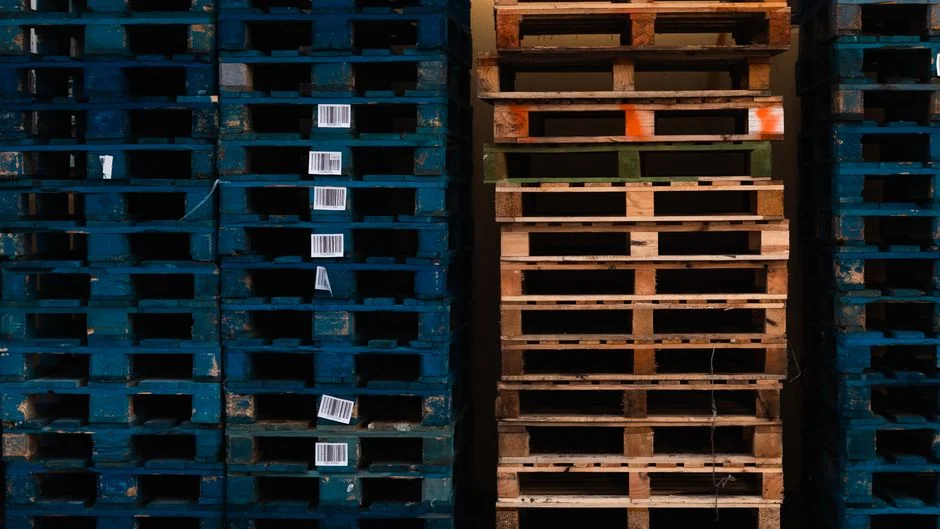
A lower production MOQ does not always produce a lower landed cost. Very small international orders can become expensive to ship because freight, customs brokerage, documentation and destination charges are spread across fewer units.
This is especially important with sea freight. A small order may need LCL shipping, while a larger quantity could improve container utilization and reduce freight cost per unit.
However, buyers should not increase an order only to improve freight efficiency if the additional inventory is not commercially useful. The right decision balances freight economics with inventory risk.
If you are comparing these shipping options, see شحن البحر FCL مقابل LCL: أيهما يجب أن تختار؟.
MOQ and Supplier Type
MOQ expectations can vary depending on whether you are dealing with a manufacturer, wholesaler or trading company.
Manufacturers may have higher minimums because they need to schedule production. Wholesalers often sell from existing stock and may accept smaller quantities, but the unit price may be higher and customization may be limited.
Trading companies can sometimes combine products from different factories or use existing supplier relationships to achieve lower effective quantities.
If your priority is small order flexibility rather than factory-direct pricing, supplier type can matter as much as negotiation skill. See المصنع مقابل تاجر الجملة: أي نوع من الموردين يجب أن تختار؟ for a broader comparison.
Signs a Supplier May Be Flexible on MOQ
- the product is standard and already in regular production;
- the supplier has stock or semi-finished inventory available;
- you are willing to use standard packaging;
- your requested quantity is close to the stated MOQ;
- you are buying fewer variants;
- the supplier is interested in your market or customer segment;
- you can show credible repeat-order potential;
- you are flexible on production timing.
These conditions reduce the supplier's incremental cost or increase the commercial value of accepting a smaller first order.
Signs the MOQ May Be Difficult to Reduce
MOQ is usually harder to negotiate when the order needs dedicated tooling, custom materials, special colors, complex printing, compliance-specific packaging or a production line that requires a large setup run.
It can also be difficult when the factory is operating at high capacity. A supplier with a full order book has less reason to interrupt production for a small custom batch.
If the requested quantity is dramatically below the normal MOQ, it may be better to change the specification, use a stock product, work through a wholesaler or select another supplier rather than forcing an unsuitable factory relationship.
How Much Lower Should You Ask?
There is no universal percentage. A reasonable request depends on how close your planned quantity is to the supplier's normal minimum and what creates that minimum.
Asking for 800 units when the standard MOQ is 1,000 may be a straightforward commercial discussion. Asking for 100 units may require a completely different production or distribution model.
Instead of asking for the “lowest possible MOQ,” state the quantity you actually need and explain why. This makes the request concrete and lets the supplier evaluate whether an exception is feasible.
Questions to Ask During MOQ Negotiation
- Does the MOQ apply per product, color, size, design or total order?
- What production or purchasing constraint creates the MOQ?
- Can the first order be smaller than repeat orders?
- Would a higher unit price allow a lower MOQ?
- Can we use standard packaging for the first order?
- Can the MOQ be split across variants?
- Is there existing stock or semi-finished material available?
- Can we pay setup or printing costs separately?
- Would a flexible production schedule help reduce the minimum?
- What MOQ would apply to future repeat orders?
A Practical MOQ Negotiation Example
A buyer finds a supplier offering a product at an MOQ of 1,000 units. The buyer wants to test the market with 400 units.
Instead of simply asking the supplier to cut the MOQ by 60%, the buyer explains that the first order is a commercial test and asks what creates the 1,000-unit minimum.
The supplier says custom printed boxes require 1,000 pieces, while the product itself can be made in 500-unit batches.
The buyer agrees to 500 units, uses plain export cartons with branded labels, accepts a small unit-price premium and confirms that custom printed packaging will be considered after the product is proven.
Both sides achieve something useful. The buyer reduces inventory risk, and the supplier avoids absorbing packaging and setup costs that would make the smaller order uneconomic.
Buyer Checklist Before Negotiating MOQ
- Confirm the product specification first.
- Know the quantity you genuinely want to buy.
- Estimate the cost of holding excess inventory.
- Ask what creates the supplier's minimum.
- Separate product MOQ from packaging MOQ.
- Decide whether lower quantity or lower unit price matters more.
- Offer practical trade-offs such as standard packaging or a setup fee.
- Keep future-volume claims realistic.
- Confirm the agreed MOQ and price in the quotation or purchase order.
- Revisit MOQ after successful repeat orders.
Sourcing Notes
MOQ should be negotiated when the standard quantity creates unnecessary inventory, cash-flow or supplier-risk exposure, especially on a first order. But the most productive negotiation happens after the product and supplier have been qualified enough for the discussion to be specific.
Buyers should first understand why the MOQ exists. If the minimum is driven by packaging, setup, raw materials or production economics, the best solution may be to change the order structure rather than simply demand fewer units at the same price.
A lower MOQ can be worth paying slightly more for if it reduces the financial risk of a first purchase. On the other hand, pushing the quantity too low can create hidden costs, weak production priority or an uneconomic order that neither side handles well.
The strongest MOQ negotiation is not about winning the smallest possible number. It is about finding a first-order quantity that protects the buyer from excess exposure while still giving the supplier a commercially workable production run.